
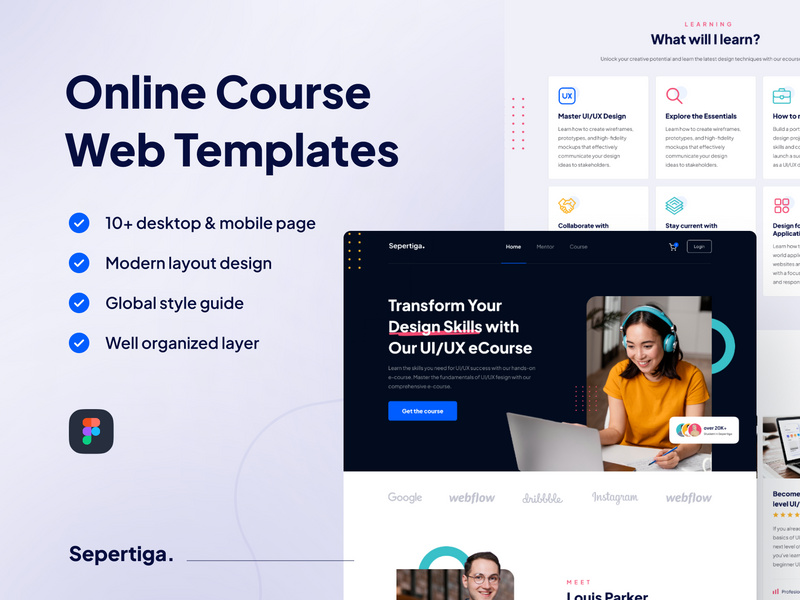
Understanding Your Needs
When it comes to creating an online course website, the template you choose can make all the difference. Your website is often the first point of contact with potential students, and it needs to convey professionalism, clarity, and ease of use. With numerous templates available, it's crucial to identify what you need from your online course website template. Are you looking for something simple and straightforward, or do you need a feature-rich platform that can handle complex course structures and integrations?Key Features to Look For
An effective online course website template should offer several key features. These include:- Customization options: The ability to personalize your website's design, layout, and content to match your brand and course offerings.
- Course creation tools: Integrated tools for creating, organizing, and selling courses, including features like course outlines, lesson plans, and quizzes.
- Payment gateways: Easy integration with payment gateways to facilitate smooth transactions.
- Responsive design: A template that adapts seamlessly to different screen sizes and devices, ensuring a great user experience across platforms.
Comparing Popular Templates
Several online course website templates stand out for their features, ease of use, and customization options. Here's a brief comparison:| Template | Features | Customization | Integration | Price |
|---|---|---|---|---|
| Thinkific | Course creation, payment gateways, email marketing | High | Extensive | $0 - $100/month |
| Teachable | Course creation, payment gateways, course compliance | Medium | Wide range | $0 - $249/month |
| Kajabi | All-in-one platform, course creation, marketing tools | High | Limited | $149 - $399/month |
Customization and Branding
Your online course website should reflect your brand and resonate with your target audience. A good template offers extensive customization options, including color schemes, typography, and layout adjustments. This ensures that your website not only looks professional but also aligns with your marketing strategy. When choosing a template, consider how easily you can modify it to match your brand identity.Building Trust with Your Audience
The trustworthiness of your online course website is paramount. Potential students need to feel confident in the quality of your courses and the security of your platform. Here are some elements that contribute to building trust:- Professional design: A clean, modern, and well-organized website design.
- Clear information: Transparent course details, pricing, and policies.
- Testimonials and reviews: Showcase feedback from satisfied students.
- Secure payment processing: Integration with reputable payment gateways.
Practical Considerations
Beyond aesthetics and features, there are practical considerations when selecting an online course website template. These include:- Scalability: Can the template grow with your business, handling increased traffic and course offerings?
- SEO optimization: Is the template optimized for search engines to help your website rank better?
- Support and community: What kind of support does the template provider offer, and is there an active community for troubleshooting and advice?
Frequently Asked Questions
Q: What makes a good online course website template?
A good template should offer a balance of features, customization options, and ease of use. It should also be responsive, secure, and scalable.
Q: Can I change my online course website template later?
Yes, but it might require some effort, especially if you've added a lot of content. It's best to choose a template that you can grow with.
Q: Are free online course website templates a good option?
Free templates can be a good starting point, but they often come with limitations in features and customization. Paid templates usually offer more flexibility and support.
Q: How do I know if a template is SEO-friendly?
Look for templates that are described as SEO-optimized or have built-in SEO tools. You can also check the template's documentation or support resources for more information.
Closing
Choosing the right online course website template is a critical step in creating a successful online course business. By understanding your needs, evaluating key features, and considering practical aspects like scalability and SEO, you can select a template that not only looks great but also supports your business goals. Take your time, do your research, and don't hesitate to reach out for support when needed. With the right template, you'll be well on your way to creating an engaging and effective online learning environment.Related: 5 Useful Things to Know About Free Resume Templates for Word
