

Finding the Right Foundation for Your Online Courses Website
When creating an online courses website, one of the most critical decisions you'll make is choosing the right template. Your website template is the foundation upon which your entire e-learning business is built. It needs to be visually appealing, user-friendly, and functional, with features that support the sale and delivery of online courses. With so many options available, selecting the perfect template can be daunting. This guide will walk you through the key considerations, trade-offs, and best practices for choosing online courses website templates that meet your needs.
Understanding Your Requirements
Before diving into the world of website templates, it's essential to understand your specific requirements. What type of courses will you be offering? Who is your target audience? What is your brand identity? Answering these questions will help you determine the features and functionalities you need from a template. For example, if you're offering video-based courses, you'll want a template that supports seamless video playback and has a robust content delivery network (CDN) integration.
Template Types: A Comparison
There are several types of online courses website templates available, each with its pros and cons. Here's a brief comparison:
| Template Type | Description | Pros | Cons |
|---|---|---|---|
| <strong>E-learning Platforms</strong> | Integrated learning management systems (LMS) with course creation tools | Comprehensive features, easy course management | Steep learning curve, expensive |
| <strong>Website Builders</strong> | Drag-and-drop website builders with template libraries | Easy to use, flexible customization | Limited advanced features, scalability issues |
| <strong>Customizable Templates</strong> | Pre-designed templates with customization options | Balance of features and ease of use, cost-effective | Limited support, potential compatibility issues |
Key Features to Look for
When evaluating online courses website templates, there are several key features to look for:
Responsive Design: Ensure the template is mobile-friendly and adapts to different screen sizes and devices.
course creation and Management: Look for templates with built-in course creation tools or seamless integrations with popular LMS platforms.
Payment Gateway Integration: Ensure the template supports popular payment gateways, such as PayPal, Stripe, or Authorize.net.
Customization Options: Opt for templates with flexible customization options, including color schemes, typography, and layout control.
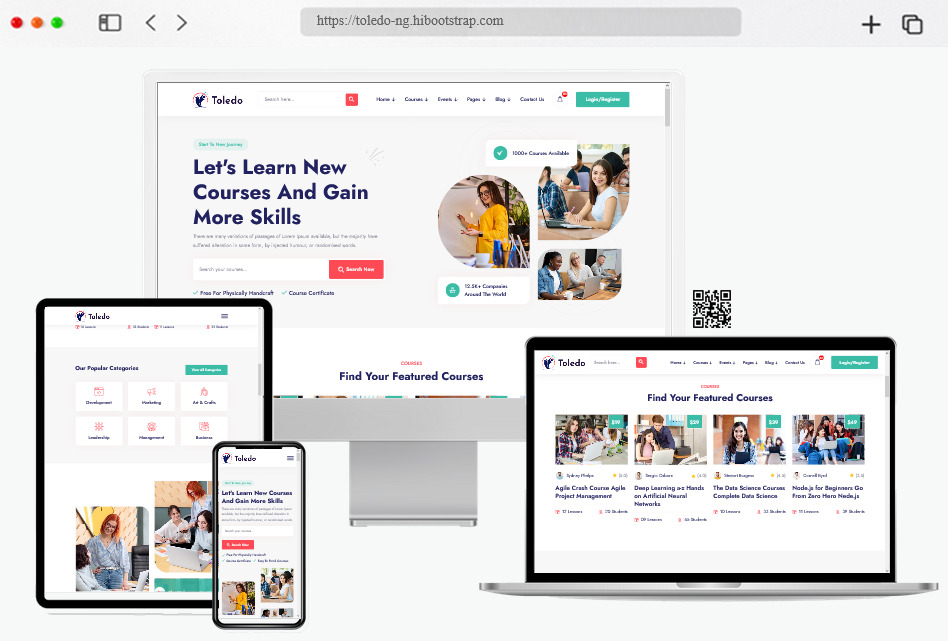
Customization and Branding
Your website template should reflect your brand identity and create a cohesive user experience. When choosing a template, consider the level of customization you need. Some templates offer extensive customization options, while others may require coding knowledge or additional plugins. Ensure the template you choose allows you to:
Upload your logo: Display your brand logo prominently on your website.
Customize color schemes: Match your brand colors to create a consistent visual identity.
Add typography: Select fonts that align with your brand voice and style.
Optimization and SEO
A well-optimized website template is crucial for search engine rankings and user experience. When selecting a template, consider the following:
Page Speed: Choose a template that loads quickly and is optimized for performance.
SEO-friendly Structure: Ensure the template has a clean, organized structure that supports search engine crawling and indexing.
Accessibility: Opt for templates that follow web accessibility guidelines (WCAG 2.1) to ensure equal access for all users.
Practical Considerations
When choosing an online courses website template, there are several practical considerations to keep in mind:
Scalability: Select a template that can grow with your business, handling increased traffic and course enrollments.
Support and Updates: Ensure the template provider offers reliable support, regular updates, and security patches.
Community and Resources: Look for templates with active communities, documentation, and resources to help you overcome challenges.
Case Study: Choosing the Right Template
Let's consider a real-world example. Suppose you're creating an online courses website focused on creative photography. Your target audience is hobbyist photographers, and you plan to offer video-based courses. You need a template that:
Supports video playback: Choose a template with optimized video playback and CDN integration.
Has a visually appealing design: Select a template with a clean, modern design that showcases photography.
Is easy to customize: Opt for a template with a user-friendly interface and flexible customization options.
Frequently Asked Questions
Q: What is the best website template for online courses?
The best template for online courses depends on your specific needs, target audience, and brand identity. Consider factors like course creation tools, payment gateway integration, and customization options.
Q: How do I choose a template for my online course website?
Consider your requirements, target audience, and brand identity. Evaluate templates based on features, customization options, and optimization.
Q: Can I use a free website template for my online courses?
While free templates can be tempting, they often come with limitations, such as limited customization options or support. Consider investing in a premium template for more features and flexibility.
Q: How do I customize my online courses website template?
Most templates offer customization options through a user-friendly interface or coding access. Ensure you have the necessary skills or support to make the desired changes.
Conclusion
Choosing the right online courses website template is a critical decision that can make or break your e-learning business. By understanding your requirements, evaluating template types, and considering key features, customization, and optimization, you'll be well on your way to creating a successful online courses website. Take your time, do your research, and select a template that aligns with your vision and goals. With the right foundation, you'll be poised for success in the competitive world of online education.
Related: 5 Useful Things to Know About WordPress Online Courses
Related: What to Know About Choosing an Online Course Website Template
