
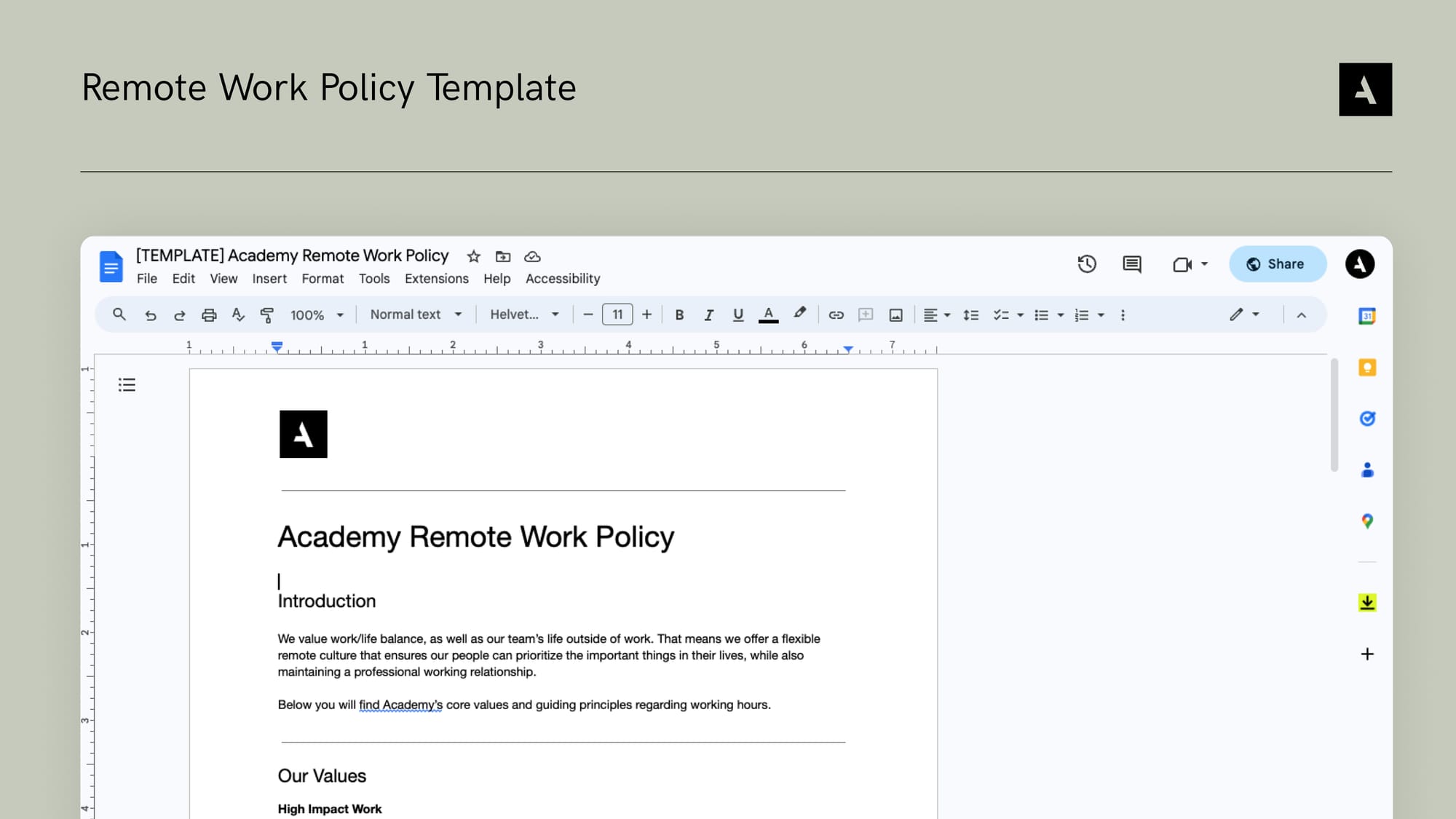
Establishing a Remote Work Policy: Why It Matters
The shift towards remote work has been gaining momentum over the past decade, with more businesses embracing flexible work arrangements to boost productivity, improve work-life balance, and reduce operational costs. However, managing a remote workforce requires careful planning, clear communication, and well-defined policies to ensure success. A remote work policy template is an essential tool for businesses to establish guidelines, set expectations, and maintain a productive and engaged remote workforce.
Key Elements of a Remote Work Policy Template
A comprehensive remote work policy template should include the following essential elements:
Eligibility criteria: Define which employees are eligible to work remotely and under what circumstances.
Work schedule: Establish clear expectations for working hours, breaks, and availability.
Communication protocols: Outline the channels and tools for communication, collaboration, and feedback.
Data security: Specify the measures to protect company data and ensure confidentiality.
Performance metrics: Define how employee performance will be evaluated and measured.
Equipment and software: Specify the equipment and software required for remote work and who is responsible for providing them.
Benefits of a Remote Work Policy Template
Implementing a remote work policy template offers numerous benefits for businesses, including:
Increased productivity: Remote workers can be more productive due to reduced distractions, improved work-life balance, and flexible work arrangements.
Cost savings: Businesses can save on office space, utilities, and equipment costs.
Access to global talent: Remote work allows businesses to attract and hire the best talent from around the world.
Improved employee satisfaction: Remote workers can enjoy better work-life balance, reduced commuting time, and increased flexibility.
Comparison of Remote Work Policy Templates
When creating a remote work policy template, businesses can choose from various templates and examples available online. Here's a comparison of some popular templates:
| Template | Features | Customization |
|---|---|---|
| <strong>SHRM Template</strong> | Comprehensive, customizable, and includes a sample agreement | High |
| <strong>HR Exchange Template</strong> | Simple, easy to use, and includes a checklist for implementation | Medium |
| <strong>Remote Work Policy Template</strong> by <strong>Workable</strong> | Detailed, includes a sample policy and a guide for implementation | High |
Creating Your Own Remote Work Policy Template
While using a pre-existing template can save time and effort, it's essential to tailor your remote work policy to your business needs and goals. Here are some steps to create your own template:
- Define your business objectives: Identify the reasons for implementing remote work and what you hope to achieve.
- Assess your business needs: Evaluate your business operations, workflows, and communication channels.
- Establish clear policies: Develop policies that align with your business objectives and needs.
- Communicate with your employees: Involve your employees in the process and ensure they understand the policies and expectations.
- Review and revise: Regularly review and revise your policy to ensure it remains effective and relevant.
Best Practices for Implementing a Remote Work Policy
To ensure the success of your remote work policy, consider the following best practices:
Set clear expectations: Establish clear goals, objectives, and expectations for remote workers.
Use technology to facilitate communication: Utilize collaboration tools, video conferencing software, and instant messaging apps to stay connected.
Foster a sense of community: Encourage remote workers to connect with each other and the company's culture.
Monitor performance and provide feedback: Regularly evaluate employee performance and provide constructive feedback.
FAQs
Q: What is a remote work policy template?
A remote work policy template is a document that outlines the guidelines, expectations, and procedures for remote work.
Q: Why do I need a remote work policy template?
A remote work policy template helps establish clear expectations, ensures compliance with laws and regulations, and protects your business interests.
Q: Can I use a pre-existing template for my business?
While using a pre-existing template can save time, it's essential to tailor your remote work policy to your business needs and goals.
Q: How often should I review and revise my remote work policy?
Regularly review and revise your policy to ensure it remains effective and relevant, ideally every 6-12 months.
Conclusion
Creating a comprehensive remote work policy template is crucial for businesses to establish a productive and engaged remote workforce. By understanding the key elements, benefits, and best practices, businesses can create a policy that aligns with their objectives and needs. Remember to review and revise your policy regularly to ensure it remains effective and relevant in today's fast-paced business environment. With a well-crafted remote work policy template, businesses can reap the benefits of remote work while minimizing the risks and challenges.
Related: 12 Time Management Tips
