

Effective learning is a skill that can be developed with the right strategies and mindset. University students often face numerous challenges, from managing their time to retaining complex information. Here are some practical study tips to help you succeed in your academic journey.
Understanding Your Learning Style
Before diving into study tips, it's essential to understand your learning style. Are you a visual, auditory, or kinesthetic learner? Visual learners learn best through images and diagrams, auditory learners through sound and music, and kinesthetic learners through hands-on experiences. Identifying your learning style will help you tailor your study approach to maximize retention and understanding.For example, if you're a visual learner, you can use diagrams and mind maps to organize information. If you're an auditory learner, you can listen to podcasts or audio recordings of lectures. Kinesthetic learners can benefit from hands-on activities, such as experiments or group projects.
Setting Achievable Goals
Setting specific, achievable goals is crucial to academic success. Break down large goals into smaller, manageable tasks to help you stay focused and motivated. Use the SMART goal framework to ensure your goals are: Specific: Clearly define what you want to achieve
Measurable: Quantify your goals to track progress
Achievable: Make sure your goals are realistic and attainable
Relevant: Align your goals with your academic and personal objectives
Time-bound: Set deadlines to create a sense of urgency
For instance, instead of setting a goal to "study more," you can set a specific goal to "complete 10 hours of study per week" or "finish reading chapter 3 by Friday."

Time Management Strategies
Effective time management is critical to balancing academic responsibilities with personal life. Here are some strategies to help you manage your time: Create a schedule: Plan out your day, week, or month, and stick to your schedule
Prioritize tasks: Focus on the most important and urgent tasks first
Use a timer: Set a timer to work in focused 25-minute increments, followed by a 5-minute break
Avoid multitasking: Focus on one task at a time to minimize distractions and maximize productivity
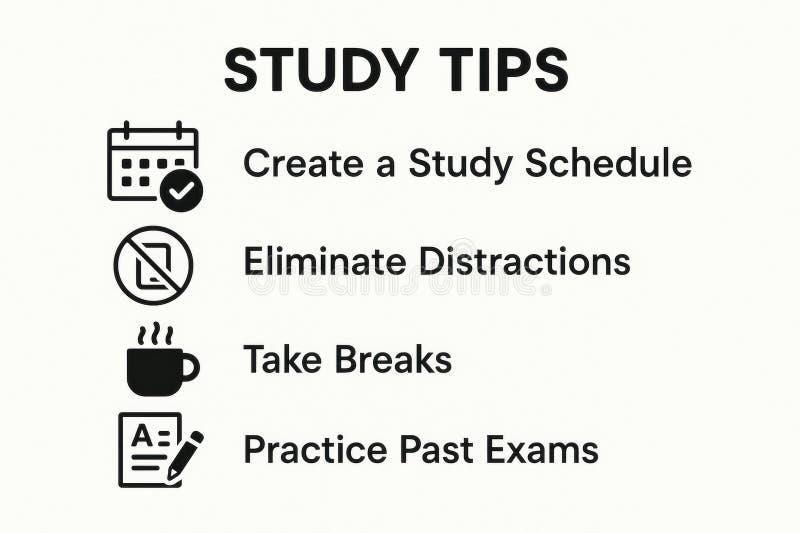
Time Management Comparison
| Strategy | Description | Benefits | | --- | --- | --- | | Pomodoro Technique | Work in focused 25-minute increments, followed by a 5-minute break | Improves focus, reduces burnout | | Time blocking | Schedule large blocks of uninterrupted time | Increases productivity, reduces distractions | | Task segmentation | Break down large tasks into smaller, manageable chunks | Reduces overwhelm, increases motivation |Active Learning Techniques
Active learning techniques can help you engage with course material and retain information better. Here are some strategies to try: Summarize notes in your own words: Recap key points in your own words to reinforce understanding
Create concept maps: Visualize relationships between ideas and concepts
Self-quiz: Test yourself on key terms and concepts to reinforce learning
Discuss with peers: Engage in group discussions to clarify doubts and gain new insights
Overcoming Procrastination
Procrastination is a common challenge many university students face. Here are some strategies to help you overcome procrastination: Break tasks into smaller steps: Divide daunting tasks into manageable chunks
Create a "starting ritual": Develop a consistent routine to signal the start of your study session
Remove distractions: Eliminate or minimize distractions, such as turning off your phone or finding a quiet study space
Reward yourself: Set small rewards for completing tasks or reaching milestones
Staying Motivated
Staying motivated is crucial to maintaining a consistent study routine. Here are some strategies to help you stay motivated: Celebrate small wins: Acknowledge and celebrate your achievements, no matter how small
Find a study buddy: Collaborate with a peer to stay accountable and motivated
Track your progress: Use a journal or spreadsheet to monitor your progress
- Reward yourself: Set aside time for relaxation and leisure activities
Frequently Asked Questions
Q: How can I stay focused during long study sessions?
Take regular breaks, use the Pomodoro Technique, and eliminate distractions to stay focused.
Q: What are some effective ways to retain information?
Use active learning techniques, such as summarizing notes in your own words, creating concept maps, and self-quizzing.
Q: How can I manage my time effectively?
Create a schedule, prioritize tasks, use a timer, and avoid multitasking to manage your time effectively.
Q: What if I'm struggling with a particular subject?
Seek help from your instructor, teaching assistant, or a tutor, and use online resources to supplement your learning.
