
Finding the Right Fit: The Importance of Structured Interviews
When it comes to hiring, making the right choice can be a game-changer for your organization. A structured interview process is key to identifying top talent, but crafting questions that accurately assess a candidate's skills and fit can be daunting. This is where a free interview questions template comes in handy. By providing a standardized framework, these templates can help ensure fairness, reduce bias, and make the interview process more efficient.
What to Look for in a Free Interview Questions Template
Not all interview questions templates are created equal. Some may be too generic, while others might be too specific to a particular industry or role. When searching for a free interview questions template, consider the following factors:
Relevance: Is the template tailored to your specific needs, or does it offer a one-size-fits-all approach?
Comprehensive: Does the template cover a wide range of topics, from skills and experience to behavioral and cultural fit questions?
Customizable: Can you easily modify the template to suit your organization's unique requirements?
Types of Interview Questions Templates
There are several types of interview questions templates available, each with its pros and cons:
Behavioral Interview Questions Template
Focuses on past experiences and behaviors as a predictor of future performance
Pros: helps assess problem-solving skills, teamwork, and adaptability
Cons: may not account for skills or knowledge acquired through education or training
Situational Interview Questions Template
Presents hypothetical scenarios to gauge a candidate's decision-making and critical thinking skills
Pros: allows for assessment of problem-solving abilities in a controlled environment
Cons: may not accurately reflect real-world situations or the candidate's actual behavior

Skills-Based Interview Questions Template
Evaluates a candidate's technical skills and knowledge
Pros: directly assesses the candidate's qualifications for the role
Cons: may overlook important soft skills or behavioral aspects
Creating Your Own Interview Questions Template
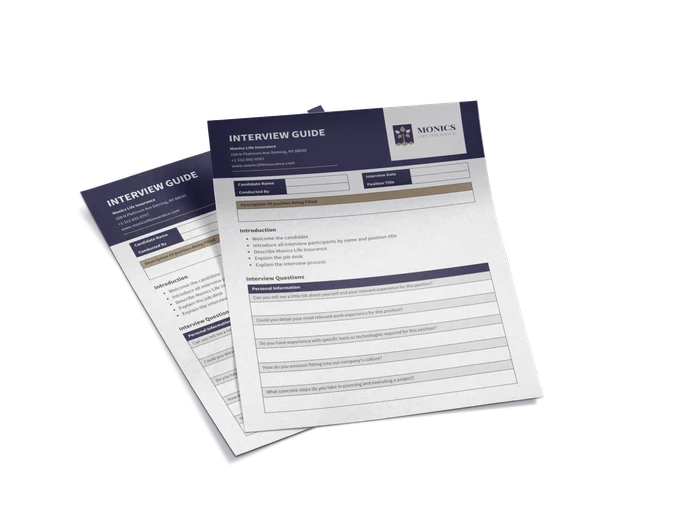
While free interview questions templates can be a great starting point, it's essential to tailor them to your organization's specific needs. Here are some steps to create your own template:
- Identify the key requirements: Determine the essential skills, qualifications, and characteristics necessary for the role.
- Develop a mix of question types: Include a combination of behavioral, situational, and skills-based questions to get a comprehensive view of the candidate.
- Keep it concise: Aim for a template that's long enough to provide valuable insights but short enough to keep the interview on track.
Best Practices for Using Interview Questions Templates
To get the most out of your interview questions template, follow these best practices:
Use it as a guide, not a script: Allow for flexibility and follow-up questions to probe deeper into the candidate's responses.
Train your interviewers: Ensure that all interviewers understand the template, the questions, and the evaluation criteria.
Continuously evaluate and refine: Regularly assess the effectiveness of your template and make adjustments as needed.
Common Mistakes to Avoid
When using interview questions templates, be aware of the following common pitfalls:
Over-reliance on a single template: Don't use the same template for every role or candidate; adapt it to the specific needs of each position.
Lack of standardization: Ensure that all interviewers use the same template and evaluation criteria to maintain fairness and consistency.
Failure to update: Regularly review and update your template to reflect changes in the job requirements, industry, or company culture.
FAQs
Q: What are some common interview questions that I should include in my template?
Some common interview questions include "Can you tell me about a time when...", "How do you handle [specific challenge]?", and "What are your long-term career goals?"
Q: How do I ensure that my interview questions template is fair and unbiased?
Use a diverse panel of interviewers, avoid leading questions, and focus on skills and behaviors rather than personal characteristics.
Q: Can I use a free interview questions template for multiple roles?
While a template can be a good starting point, it's essential to tailor it to the specific needs of each role to ensure relevance and effectiveness.
Putting It All Together
A well-crafted interview questions template can be a valuable tool in your hiring arsenal. By understanding the different types of templates, creating your own customized template, and following best practices, you can streamline your interview process, reduce bias, and make informed hiring decisions. Take the time to develop a comprehensive template that reflects your organization's unique needs, and you'll be well on your way to finding the right fit for your team.
Related: A Practical Guide to Online Business Ideas for Seniors
Related: 5 Useful Things to Know About Cheap Resume Templates in Berlin
