
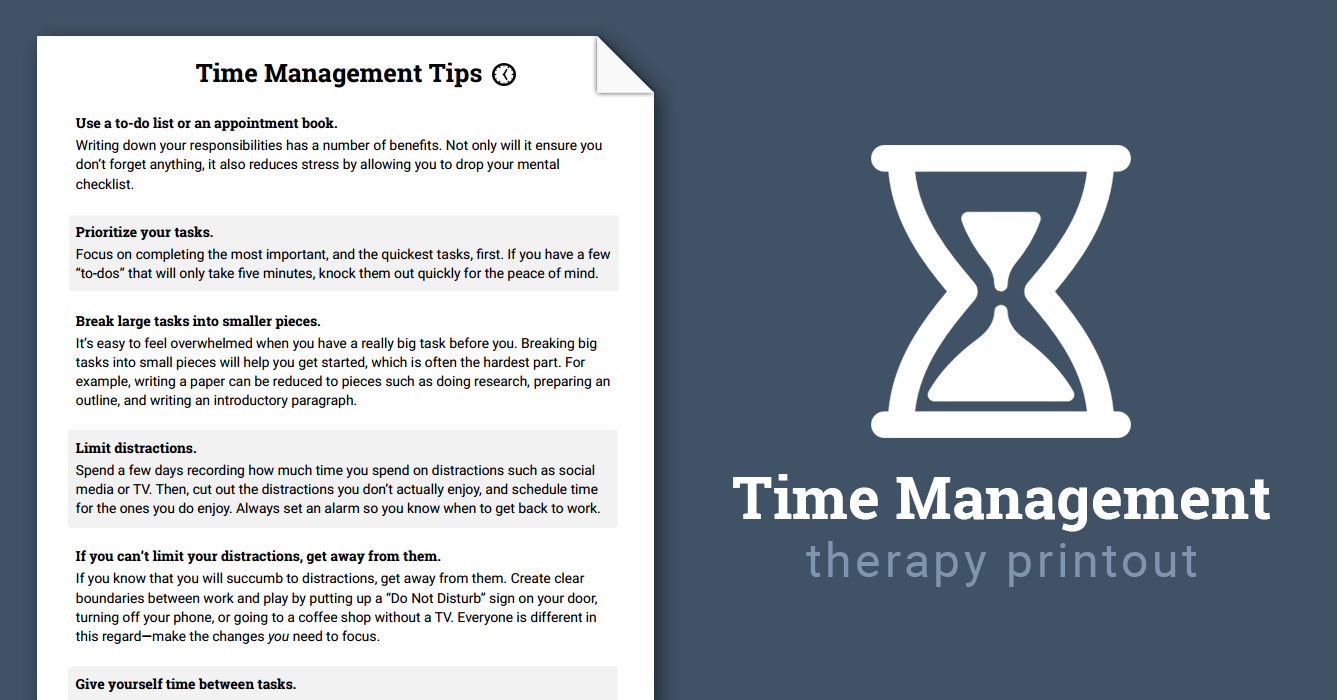
Mastering Time Management with Therapist Aid
Effective time management is crucial for maintaining a healthy work-life balance, reducing stress, and increasing productivity. With the help of Therapist Aid, a renowned online resource for mental health professionals and individuals alike, we can explore practical strategies for managing time more efficiently. In this article, we'll discuss the importance of time management, identify common pitfalls, and provide actionable tips from Therapist Aid to help you prioritize tasks, set realistic goals, and achieve a better balance between work and personal life.
Understanding the Importance of Time Management
Time management is not just about getting more done in less time; it's about creating a sustainable rhythm that allows you to thrive in all areas of your life. Poor time management can lead to increased stress, decreased productivity, and a sense of burnout. On the other hand, effective time management can help you:
Achieve your goals and priorities
Reduce stress and anxiety
Improve your work-life balance
Increase productivity and efficiency
Enhance your overall well-being
Common Time Management Pitfalls
Before we dive into the tips from Therapist Aid, let's identify some common time management pitfalls that can hinder your progress:
Procrastination and task avoidance
Poor prioritization and goal setting
Inadequate scheduling and planning
Distractions and multitasking
Lack of boundaries and self-care
Prioritization Strategies from Therapist Aid
Prioritization is a critical aspect of effective time management. Therapist Aid recommends the following strategies to help you prioritize tasks:
Eisenhower Matrix: Categorize tasks into urgent vs. important and focus on the most critical ones first.
ABC Analysis: Label tasks as A (high priority), B (medium priority), or C (low priority) and tackle the A-list tasks first.
Must-Should-Could-Won't (MSCW): Label tasks as must-do, should-do, could-do, or won't-do to help you prioritize and focus.
Goal Setting and Scheduling
Goal setting and scheduling are essential components of effective time management. Therapist Aid suggests:
SMART Goals: Set Specific, Measurable, Achievable, Relevant, and Time-bound goals to help you stay focused and motivated.
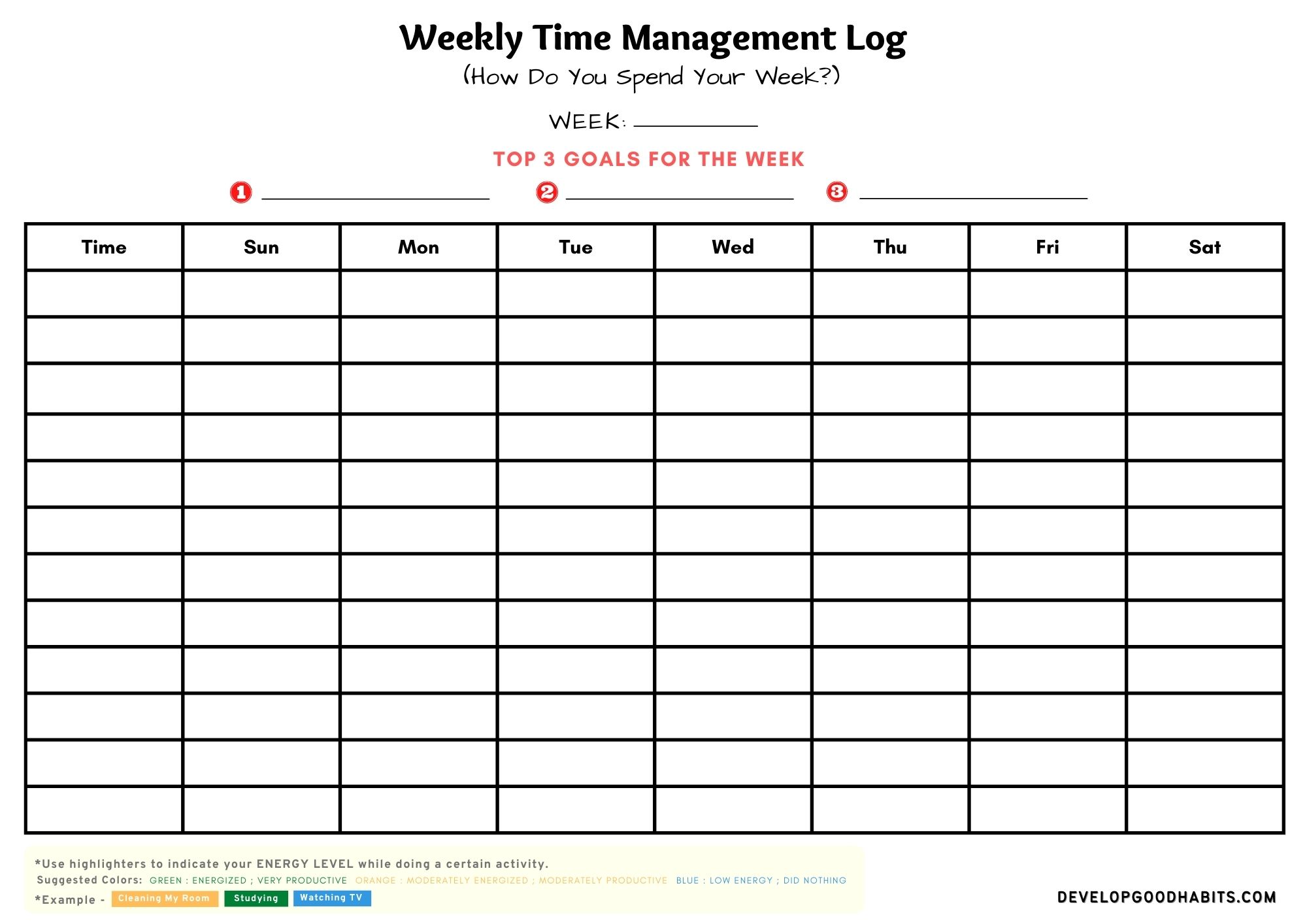
Scheduling: Plan out your day, week, or month, and schedule tasks accordingly. Be realistic about how much time each task will take, and leave some buffer time for unexpected tasks or self-care.
Avoiding Distractions and Multitasking
Distractions and multitasking can significantly hinder your productivity. Therapist Aid recommends:
Minimizing distractions: Identify potential distractions (e.g., social media, email, phone notifications), and eliminate them while you work. Use tools like website blockers or phone apps to help you stay focused.
Single-tasking: Focus on one task at a time to ensure you're giving it your undivided attention. Multitasking can decrease productivity and increase stress.
Self-Care and Boundary Setting
Self-care and boundary setting are crucial for maintaining a healthy work-life balance. Therapist Aid emphasizes:
Self-care: Schedule time for activities that nourish your mind, body, and spirit, such as exercise, meditation, or spending time with loved ones.
- Boundary setting: Establish clear boundaries between your work and personal life. Learn to say "no" to tasks that drain your energy or compromise your well-being.
Comparison: Traditional Time Management vs. Therapist Aid Approach
| Traditional Time Management | Therapist Aid Approach |
|---|---|
| <strong>Focus</strong> | Emphasizes productivity and efficiency |
| <strong>Prioritization</strong> | Often relies on rigid schedules and to-do lists |
| <strong>Self-care</strong> | May overlook self-care and boundary setting |
FAQs
Q: What is Therapist Aid, and how can it help me with time management?
Therapist Aid is an online resource that provides mental health professionals and individuals with practical tools and strategies for managing time, reducing stress, and increasing productivity.
Q: How can I prioritize tasks effectively using the Eisenhower Matrix?
The Eisenhower Matrix helps you categorize tasks into urgent vs. important. Focus on tasks that are both urgent and important, then move on to important but non-urgent tasks.
Q: What is the difference between single-tasking and multitasking?
Single-tasking involves focusing on one task at a time, while multitasking involves juggling multiple tasks simultaneously. Single-tasking can increase productivity and reduce stress.
Q: How can I set realistic goals and avoid overcommitting myself?
Use the SMART goal framework to set Specific, Measurable, Achievable, Relevant, and Time-bound goals. Be realistic about your capabilities and limitations, and leave some buffer time for unexpected tasks or self-care.
Closing
Effective time management is a skill that takes practice, patience, and self-awareness. By incorporating Therapist Aid's practical strategies into your daily routine, you can prioritize tasks, set realistic goals, and achieve a better work-life balance. Remember to be kind to yourself, and don't be too hard on yourself if you encounter setbacks. With time and practice, you can master the art of time management and live a more fulfilling, productive life.
