
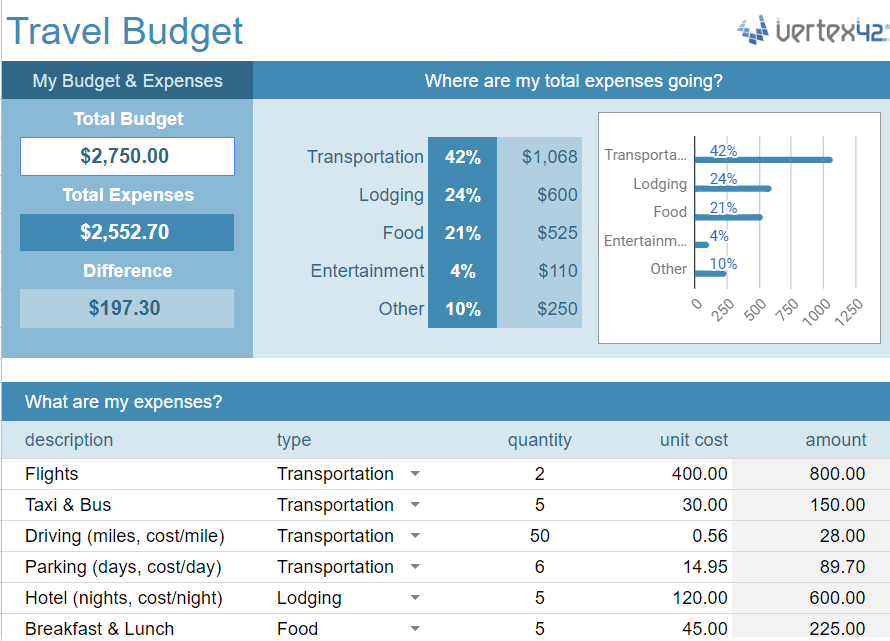
Planning Your Dream Trip on a Budget
You've finally decided to take that dream trip, but you're worried about the costs. Don't let financial stress ruin your travel excitement. With some smart planning, you can have a fantastic trip without overspending. Let's dive into practical travel budget planning tips to help you make the most of your hard-earned money.
Setting a Realistic Budget
Before you start planning, it's essential to set a realistic budget. Consider your income, expenses, and savings goals. Allocate a specific amount for your trip and stick to it. A good rule of thumb is to plan for at least $50-100 per day, depending on your destination and travel style.
For example, if you're planning a 7-day trip to Europe, your daily budget might look like this:
| Category | Daily Budget |
|---|---|
| Accommodation | $30-50 |
| Food | $20-30 |
| Transportation | $10-20 |
| Activities | $20-30 |
| Miscellaneous | $10-20 |
Total daily budget: $90-150
Prioritizing Your Spending
Not all travel expenses are created equal. Prioritize your spending based on your interests and needs. If you're a foodie, you might want to allocate more money for dining. If you're an adventure-seeker, you might want to prioritize activities like hiking or scuba diving.
Consider using the 50/30/20 rule:
50% of your budget for necessary expenses like accommodation and transportation
30% for discretionary spending like food and activities
20% for miscellaneous expenses like souvenirs and tips
Finding Affordable Accommodation
Accommodation can be one of the biggest expenses when traveling. Here are some tips to find affordable options:
Book in advance to get the best rates
Consider staying in hostels or budget hotels
Look for alternative accommodation options like Airbnb or vacation rentals
Use travel apps like Hotel Tonight or Last Minute Travel to find last-minute deals
For example, if you're traveling to Tokyo, you might find a budget hotel for $50-70 per night. Alternatively, you could stay in a hostel for $20-30 per night.

Saving on Transportation
Transportation costs can add up quickly, but there are ways to save:
Research public transportation options like buses and trains
Consider buying a travel pass or card for discounted fares
Look for affordable flights or book in advance to get the best rates
Use travel apps like Rome2rio or Google Maps to find the cheapest routes
For example, if you're traveling from New York to Los Angeles, you might find a flight for $200-300. Alternatively, you could take a bus or train for $100-200.
Managing Your Expenses
Once you're on your trip, it's essential to manage your expenses effectively. Here are some tips:
Use a budgeting app like Mint or You Need a Budget to track your spending
Keep a record of your expenses in a spreadsheet or notebook
Avoid impulse purchases and stick to your budget
Consider using a prepaid currency card or travel money card
Common Travel Budget Mistakes
Don't make these common travel budget mistakes:
Not budgeting enough for food and activities
Not researching affordable accommodation options
Not considering transportation costs
Not managing your expenses effectively
Travel Budget Planning Tools
Here are some useful tools to help you plan your travel budget:
Budgeting apps like Mint or You Need a Budget
Travel planning websites like TripIt or Google Trips
Accommodation booking websites like Booking.com or Airbnb
Transportation comparison websites like Skyscanner or Rome2rio
Case Study: A Budget-Friendly Trip to Thailand
Let's take a look at a real-life example of a budget-friendly trip to Thailand:
Accommodation: $10-20 per night (hostel or budget hotel)
Food: $5-10 per meal (street food or local restaurants)
Transportation: $10-20 per day (tuk-tuk or public transportation)
- Activities: $20-30 per day (temples, beaches, or cultural events)
Total daily budget: $50-80
For a 7-day trip, the total budget would be: $350-560
Frequently Asked Questions
Q: How do I plan a travel budget?
Start by setting a realistic budget, prioritizing your spending, and researching affordable accommodation and transportation options.
Q: What is a good daily budget for travel?
A good daily budget for travel depends on your destination and travel style, but a general rule of thumb is $50-100 per day.
Q: How can I save money on accommodation?
Consider staying in hostels or budget hotels, booking in advance, and looking for alternative accommodation options like Airbnb or vacation rentals.
Q: What are some common travel budget mistakes?
Common travel budget mistakes include not budgeting enough for food and activities, not researching affordable accommodation options, and not managing your expenses effectively.
Conclusion
Planning your travel budget effectively takes some effort, but it's worth it to make the most of your trip. By setting a realistic budget, prioritizing your spending, and researching affordable options, you can have a fantastic trip without breaking the bank. Remember to manage your expenses effectively and avoid common travel budget mistakes. Happy travels!
Related: Master Meal Prep: How to Make Perfect Sandwiches Ahead of Time
