
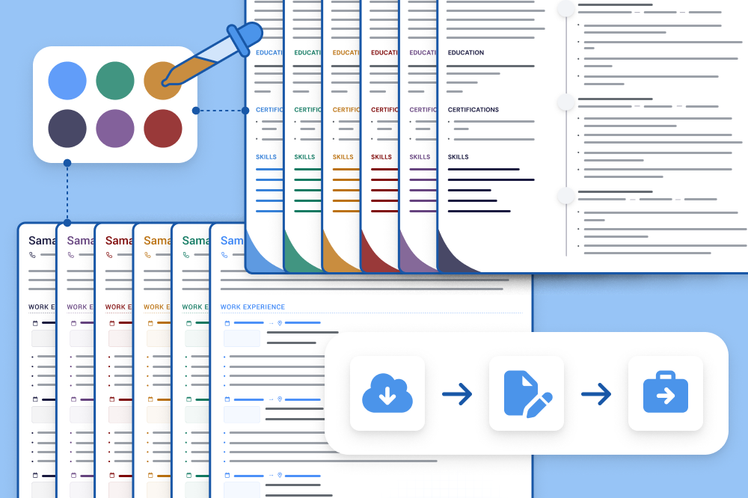
Your Resume Matters
When you're new to the job market, your resume can feel like a daunting puzzle. What do you include? How do you format it? And most importantly, how do you make it shine? A well-crafted resume is your ticket to landing an interview, and we're here to guide you through the process.Choosing the Right Template
The first step in creating a standout resume is selecting a template that works for you. With so many options available, it's essential to pick one that's clean, easy to read, and tailored to your industry. Here are a few popular types of resume templates: Chronological: Best for those with significant work experience, this template lists your work history in reverse chronological order.
Functional: Ideal for career changers or those with gaps in their employment history, this template focuses on your skills and qualifications.
Combination: A hybrid of the chronological and functional templates, this format showcases both your work history and skills.
Essential Sections to Include
Regardless of the template you choose, there are certain sections that every resume should include: Contact Information: Make it easy for hiring managers to get in touch with you by including your name, email address, phone number, and LinkedIn profile (if applicable).
Professional Summary: A brief overview of your experience, skills, and career goals. This section should entice the reader to read on.
Education: List your highest level of education first, including the name of the institution, degree earned, and dates attended.
Work Experience: This section should be tailored to the job you're applying for, highlighting your relevant skills and achievements.
Skills: A list of your relevant technical, language, and soft skills.
Writing a Compelling Professional Summary
Your professional summary is often the first thing a hiring manager reads, so it's crucial to get it right. Here are some tips to help you craft a compelling summary: Keep it concise: Aim for 2-3 sentences at most.
Tailor it to the job: Use keywords from the job description to demonstrate your relevance.
Highlight your strengths: Emphasize your achievements and qualifications.
A Sample Resume Template for Beginners
Here's a versatile template you can use as a starting point:[Your Name]
[Address]
[City, State Zip]
[Phone Number]
[Email Address]
[LinkedIn Profile (if applicable)]
Professional Summary:
Dedicated and detail-oriented [ profession/student] with [number] years of experience in [industry/field]. Proven track record of [key achievement] and a strong passion for [related field]. Seeking a challenging role that utilizes my skills and experience.
Education:
[Bachelor's/Associate's] Degree in [Major], [University Name], [Graduation Date]
Work Experience:
[Job Title], [Company Name], [Employment Dates]
+ Briefly describe job responsibilities and achievements.
Skills:
Technical: [list technical skills, e.g., programming languages, software proficiency]
Language: [list languages spoken, if applicable]
Soft Skills: [list soft skills, e.g., communication, teamwork]
Common Mistakes to Avoid
When creating your resume, it's essential to avoid common mistakes that can make you stand out for the wrong reasons: Typos and grammatical errors: A single mistake can make a negative impression and raise doubts about your attention to detail.
Poor formatting: Use a clean and easy-to-read format, with clear headings and bullet points.
Lack of relevance: Tailor your resume to the job you're applying for, highlighting your relevant skills and experience.
Tailoring Your Resume to the Job
To increase your chances of landing an interview, it's crucial to tailor your resume to the job description. Here are some tips: Use keywords: Identify key phrases and words used in the job description and incorporate them into your resume.
Emphasize relevant experience: Highlight your relevant work experience and achievements.
Customize your summary: Tailor your professional summary to the job, emphasizing your relevant skills and qualifications.
Final Tips and Next Steps
Your resume is just the beginning. Here are some final tips and next steps to help you succeed: Proofread and edit: Carefully review your resume for typos, grammatical errors, and formatting issues.
Get feedback: Ask a friend or mentor to review your resume and provide feedback.
- Practice your interview skills: Prepare for common interview questions and practice your responses.
Frequently Asked Questions
Q: What is the best resume template for a beginner?
The best template for a beginner is one that's clean, easy to read, and tailored to your industry.
Q: How do I write a strong professional summary?
A strong professional summary should be concise, tailored to the job, and highlight your strengths.
Q: What are some common mistakes to avoid in a resume?
Common mistakes to avoid include typos and grammatical errors, poor formatting, and lack of relevance.
Q: How do I tailor my resume to a job description?
To tailor your resume, use keywords from the job description, emphasize relevant experience, and customize your summary.
Your Next Move
With these tips and a versatile template, you're ready to create a winning resume that showcases your skills and experience. Remember to tailor your resume to the job, avoid common mistakes, and practice your interview skills. Good luck in your job search!Related: 5 Useful Things to Know About Small Business Ideas for Women
