
A well-planned social media content calendar is essential for businesses and individuals looking to establish a strong online presence. By organizing and scheduling content in advance, you can ensure consistent engagement with your audience, reduce last-minute scrambles, and optimize your online marketing efforts.
Understanding the Importance of a Social Media Content Calendar
A social media content calendar is more than just a schedule of posts; it's a strategic plan that aligns with your overall marketing goals. It helps you visualize and organize content across multiple social media platforms, ensuring that your messaging is cohesive and effective. By having a clear content plan, you can:
Save time and reduce stress by avoiding last-minute scrambles for content
Improve consistency and reduce the risk of over-posting or under-posting
Enhance engagement by ensuring that your content resonates with your audience
Track performance and adjust your strategy based on data-driven insights
Identifying Your Target Audience and Content Goals
Before creating a social media content calendar, it's essential to understand your target audience and content goals. Who are you trying to reach? What are their interests, preferences, and pain points? What do you want to achieve through your social media content? Are you looking to:
Increase brand awareness and establish thought leadership?
Drive website traffic and generate leads?
Boost engagement and build a community?
Support a specific marketing campaign or promotion?
By answering these questions, you can create content that resonates with your audience and aligns with your marketing objectives.
Choosing the Right Social Media Platforms
With numerous social media platforms available, it's crucial to focus on the ones that best align with your target audience and content goals. Here's a quick comparison of popular social media platforms:
| Platform | Audience | Content Type |
|---|---|---|
| Wide range of ages and interests | Varied (text, images, videos) | |
| Visually-oriented audience (18-34) | Visual-centric (images, videos, stories) | |
| Fast-paced, real-time audience (18-49) | Short-form text and multimedia | |
| Professional audience (25-49) | B2B-focused (text, images, videos) |
By selecting the right platforms, you can ensure that your content reaches the right audience and achieves your marketing objectives.
Creating a Content Calendar Template
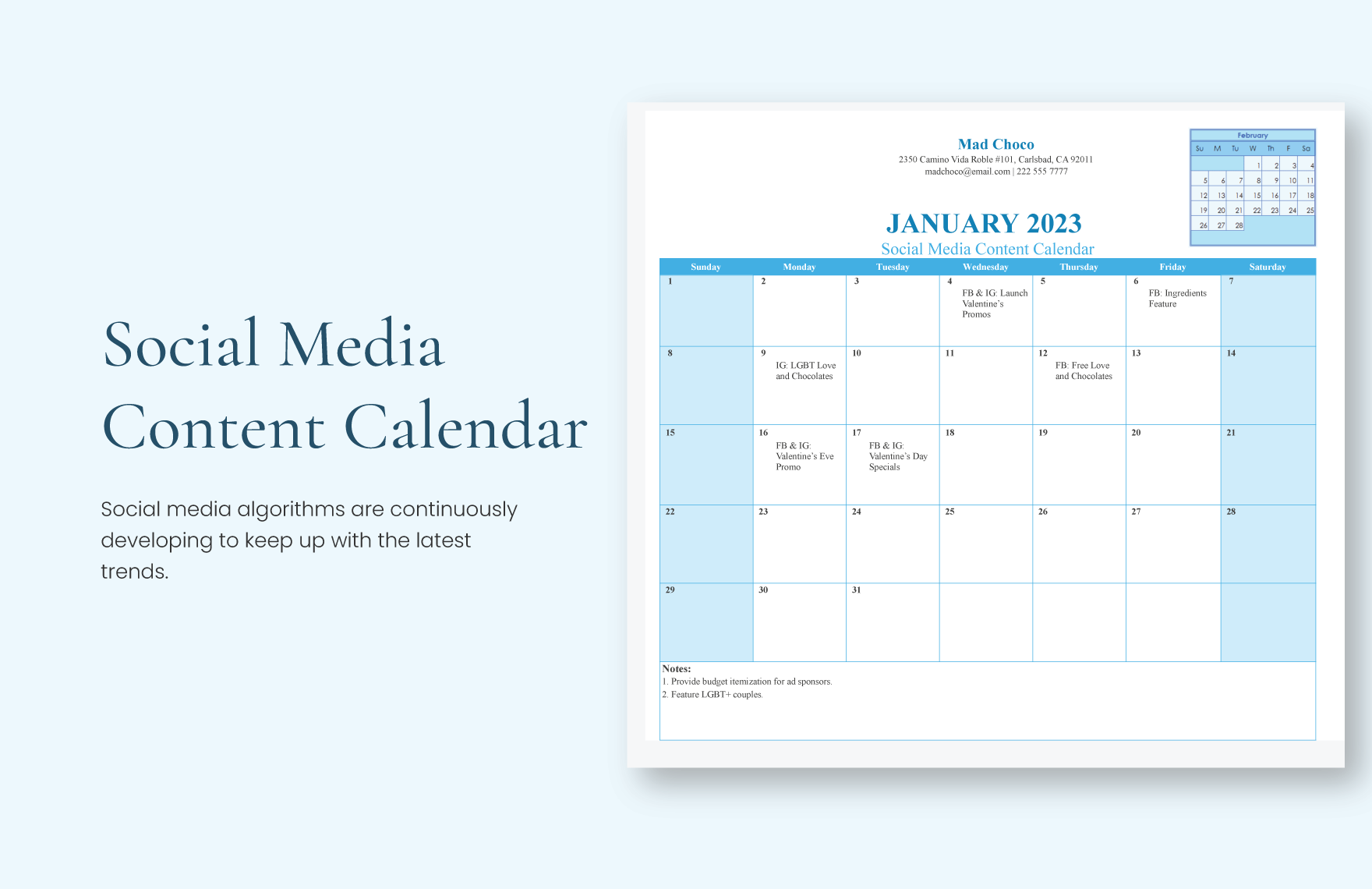
A content calendar template is a crucial tool for planning and organizing your social media content. You can create a template using a spreadsheet, calendar, or specialized tool like Hootsuite or Buffer. A basic template should include:
Date and platform
Content type (text, image, video, etc.)
Content description
Target audience
Engagement metrics (likes, comments, shares, etc.)
Developing a Content Strategy
With your template in place, it's time to develop a content strategy that aligns with your marketing goals. Here are some tips to get you started:
Theme-based content: Organize content around specific themes or topics to create a cohesive narrative.
Content types: Mix and match content types (text, images, videos, etc.) to keep your audience engaged.
Tone and voice: Ensure that your tone and voice are consistent across all content.
Call-to-actions: Include clear call-to-actions to drive engagement and conversions.
Measuring and Optimizing Performance
A social media content calendar is not a set-it-and-forget-it tool. It's essential to track performance and adjust your strategy based on data-driven insights. Here are some metrics to monitor:
Engagement metrics (likes, comments, shares, etc.)
Reach and impressions
Click-through rates (CTRs)
Conversion rates
By analyzing these metrics, you can identify what's working and what's not, and make data-driven decisions to optimize your content strategy.
Common Mistakes to Avoid
When creating a social media content calendar, it's essential to avoid common mistakes that can derail your strategy. Here are some pitfalls to watch out for:
Over-posting: Avoid flooding your audience's feeds with too much content.
Under-posting: Ensure that you're posting consistently to maintain engagement.
Lack of visual content: Incorporate visual content to make your posts more engaging.
- Ignoring engagement: Respond to comments and messages to build a community.
FAQs
Here are some frequently asked questions about social media content calendars:
Q: How far in advance should I plan my social media content?
It's recommended to plan your social media content at least 2-3 weeks in advance, but ideally 1-2 months.
Q: What is the best way to schedule social media posts?
You can use specialized tools like Hootsuite, Buffer, or Sprout Social to schedule social media posts.
Q: How often should I post on social media?
The frequency of posting on social media depends on the platform and your audience. Aim to post at least 3-5 times per week.
Q: Can I use a social media content calendar for multiple platforms?
Yes, you can use a social media content calendar to plan and organize content across multiple platforms.
Conclusion
A well-planned social media content calendar is essential for driving consistent engagement and achieving your online marketing goals. By understanding your target audience, choosing the right platforms, and developing a content strategy, you can create a content calendar that resonates with your audience and helps you build a strong online presence. Remember to track performance, avoid common mistakes, and adjust your strategy based on data-driven insights. With a solid content calendar in place, you'll be well on your way to social media success.
Related: Best Digital Planner Templates Free
