
Job Interview Questions: What Actually Makes Sense?
=====================================================
Understanding the Art of Job Interview Questions
When it comes to acing a job interview, preparation is key. One of the most critical aspects of preparation is familiarizing yourself with common job interview questions. However, simply memorizing a list of questions and answers is not enough. To truly excel, you need to understand the underlying principles and strategies that will help you stand out from the competition.
:max_bytes(150000):strip_icc()/job-interview-questions-and-answers-2061204-Final-edit-3c00ddccd27146ee877c178884cea990.jpg)
Common Job Interview Questions: What to Expect
So, what are the most common job interview questions? While the specific questions may vary depending on the company and position, there are some common themes and topics that are frequently covered. These may include:
Introduction and background: Tell me about yourself, why do you want to work for this company, and what are your strengths and weaknesses?
Job-specific skills: What do you know about our company/industry, and how do you think your skills and experience align with this role?
Behavioral questions: Can you give an example of a time when you overcame a difficult challenge or demonstrated a specific skill or trait?

Crafting Compelling Answers: The STAR Method
When it comes to answering job interview questions, the STAR method is a powerful tool to help you structure your responses. STAR stands for:
S - Situation: Set the context for the story you're about to tell
T - Task: Explain the task or challenge you faced
A - Action: Describe the specific actions you took to address the challenge
R - Result: Share the outcome or results of your actions
By using the STAR method, you can create clear, concise, and compelling answers that showcase your skills and experience.
Balancing Confidence and Humility: The Fine Line
When answering job interview questions, it's essential to strike the right balance between confidence and humility. On the one hand, you want to showcase your skills and experience, but on the other hand, you don't want to come across as arrogant or entitled.
Consider the following example:
Overconfident response: "I'm the best candidate for this role, and I know I can do it better than anyone else."
Humble response: "I'm excited about this opportunity, and I believe my skills and experience make me a strong fit. I'm eager to learn and contribute to the team."
The Pros and Cons of Common Interview Questions
| <strong>Question Type</strong> | <strong>Pros</strong> | <strong>Cons</strong> |
|---|---|---|
| Behavioral questions | Helps assess problem-solving skills and past experiences | Can feel like an interrogation, may not account for unique situations |
| Job-specific skills questions | Demonstrates expertise and knowledge | May not account for transferable skills or adaptability |
| Introduction and background questions | Allows candidate to share their story and stand out | May lead to generic or rehearsed responses |
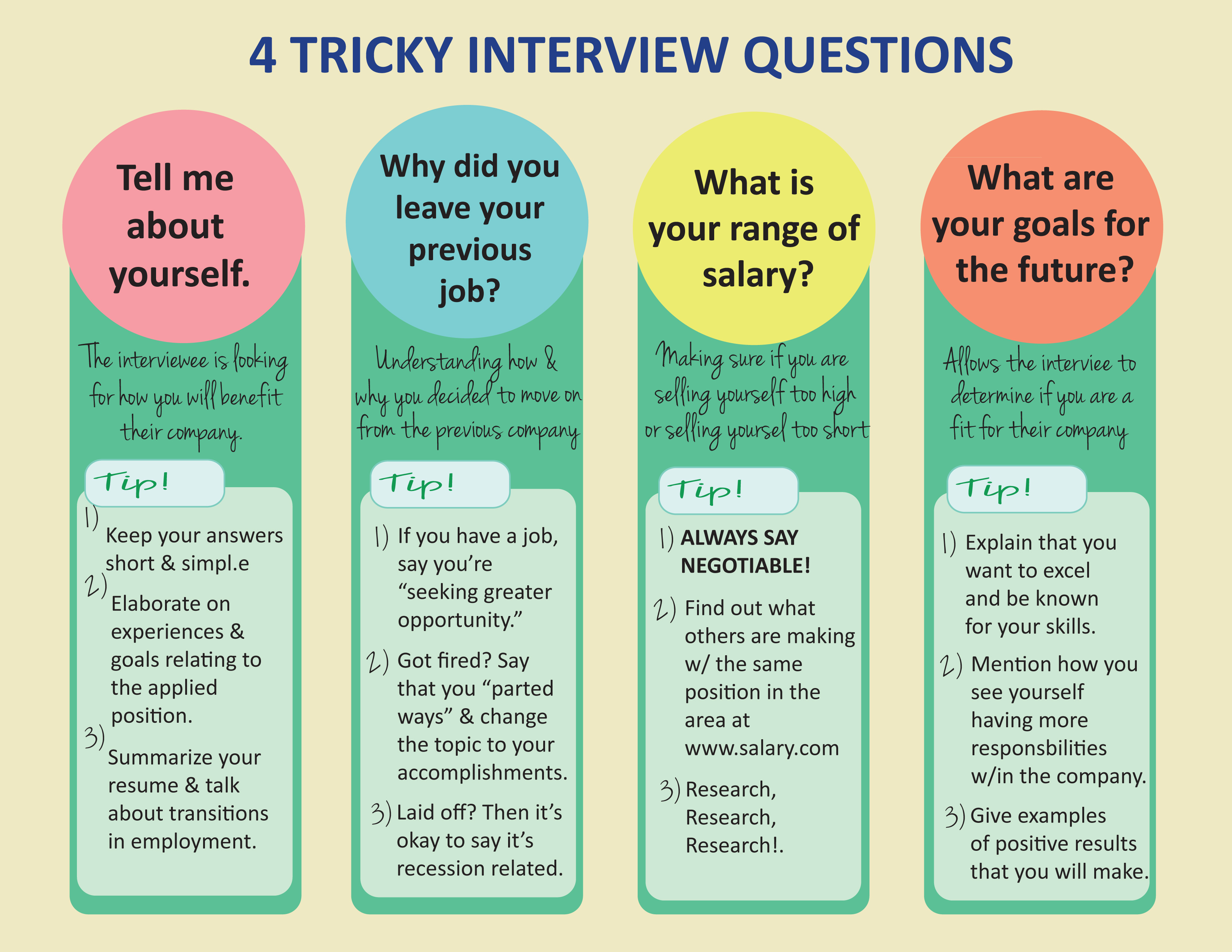
Navigating Tricky Interview Questions: A Case Study
Let's consider a common tricky interview question: "What's your greatest weakness?"
Naive response: "I'm a perfectionist, and I sometimes spend too much time on details."
Strategic response: "I've identified areas where I can improve, such as delegating tasks more effectively. I've been working on developing my leadership skills and trusting my team members to take on more responsibility."
Frequently Asked Questions
Q: What are the most common job interview questions?
Common job interview questions may include introduction and background questions, job-specific skills questions, and behavioral questions.
Q: How can I prepare for a job interview?
Prepare by researching the company, practicing your responses to common interview questions, and reviewing your own skills and experiences.
Q: What's the best way to answer behavioral interview questions?
Use the STAR method to structure your responses, and focus on specific examples from your past experiences.
Q: How can I stand out in a job interview?
Show enthusiasm and interest in the company and role, and highlight your unique skills and experiences.
Final Tips and Takeaways
To ace a job interview, it's essential to be prepared, confident, and genuine. Here are some final tips to keep in mind:
Research the company and role to understand their needs and expectations
Practice your responses to common interview questions
Use the STAR method to structure your answers
Balance confidence and humility in your responses
Show enthusiasm and interest in the company and role
By following these tips and strategies, you can increase your chances of acing the interview and landing your dream job.
Related: How to Ace a Job Interview: Essential Questions Template
Related: What to Know About Online Business Ideas for Beginners
Related: Cheap Resume Templates in Paris: What Actually Makes Sense?
