
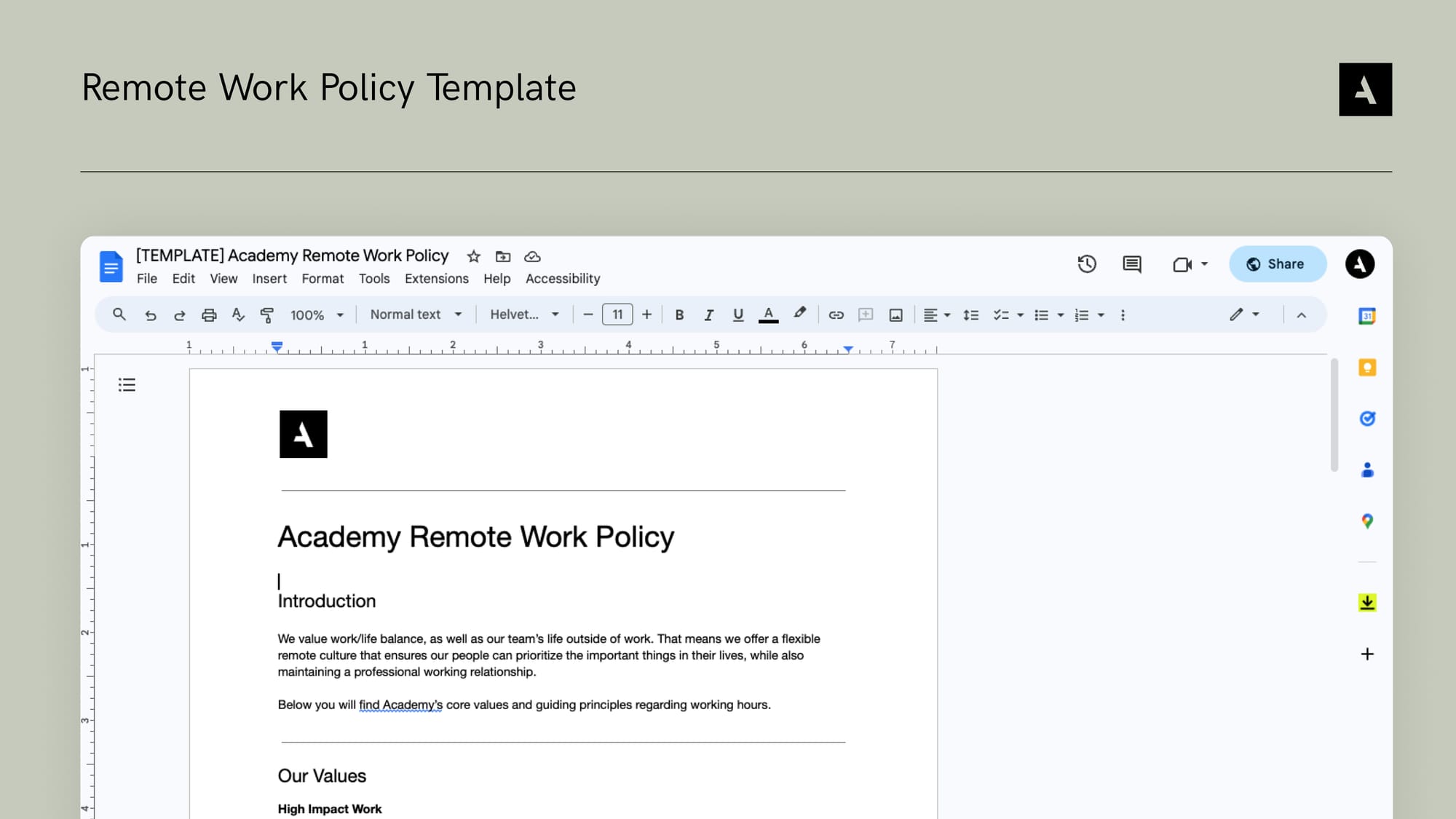
As the world shifts towards flexible work arrangements, companies are scrambling to create remote work policies that are both effective and compliant with regulations. A well-crafted remote work policy is essential for maintaining productivity, ensuring data security, and protecting company assets. But, where do you start?
Understanding Remote Work Policies
A remote work policy, also known as a telecommuting policy, outlines the guidelines and expectations for employees who work from home or remotely. It covers aspects such as work hours, communication, data security, and performance monitoring. A good remote work policy should be clear, concise, and accessible to all employees.
Benefits of a Remote Work Policy
Increased flexibility: Remote work policies allow employees to work from anywhere, at any time, as long as they have a stable internet connection.
Cost savings: By reducing the need for office space, companies can save on rent, utilities, and equipment costs.
Improved productivity: Without the distractions of a traditional office environment, some employees find they are more productive when working remotely.
Access to global talent: With a remote work policy, companies can hire the best talent from all over the world, rather than being limited to a specific geographic area.
Creating a Remote Work Policy from Scratch
Creating a remote work policy from scratch can be a daunting task, especially for small businesses or those with limited HR resources. Here are some key elements to consider:
Define remote work arrangements: Clearly outline the types of remote work arrangements available, such as full-time remote, part-time remote, or flexible hours.
Establish communication protocols: Specify how employees should communicate with each other and with management while working remotely.
Set performance expectations: Clearly outline performance expectations, including goals, objectives, and deadlines.
Data security and confidentiality: Emphasize the importance of data security and confidentiality, and outline procedures for protecting company data.
Using a Free Remote Work Policy Template
A free remote work policy template can be a great starting point for creating a comprehensive policy. Here are some benefits of using a template:
Saves time: A template can save you hours of time and effort, as you don't have to start from scratch.
Ensures compliance: A template can help ensure that your policy is compliant with relevant laws and regulations.
Provides a framework: A template provides a framework for creating a comprehensive policy, including key elements and best practices.
What to Look for in a Free Remote Work Policy Template
When searching for a free remote work policy template, look for the following:
Relevance: Ensure that the template is relevant to your industry and business type.
Comprehensive: Choose a template that covers all the key elements of a remote work policy.
Customizable: Opt for a template that is easy to customize to fit your business needs.
Customizing Your Remote Work Policy Template
Once you've found a free remote work policy template, it's essential to customize it to fit your business needs. Here are some tips:
Review and revise: Review the template carefully and revise it to fit your business needs and culture.
Consult with HR and management: Consult with HR and management to ensure that the policy aligns with company goals and objectives.
Communicate with employees: Communicate the policy clearly with all employees, and ensure that they understand their roles and responsibilities.
Common Mistakes to Avoid
When creating a remote work policy, there are several common mistakes to avoid:
Lack of clarity: Avoid vague or unclear language that can lead to confusion and misinterpretation.
Insufficient communication: Ensure that employees understand their roles and responsibilities, and that communication protocols are clear.
Inadequate data security: Prioritize data security and confidentiality, and outline procedures for protecting company data.
Best Practices for Remote Work Policies
Here are some best practices for remote work policies:
Be flexible: Be open to adjusting your policy as needed, based on employee feedback and business requirements.
Monitor performance: Regularly monitor employee performance and adjust the policy as needed.
- Prioritize data security: Prioritize data security and confidentiality, and outline procedures for protecting company data.
Frequently Asked Questions
Q: What is a remote work policy template?
A remote work policy template is a document that outlines the guidelines and expectations for employees who work from home or remotely.
Q: Why do I need a remote work policy?
A remote work policy is essential for maintaining productivity, ensuring data security, and protecting company assets.
Q: Can I use a free remote work policy template?
Yes, you can use a free remote work policy template as a starting point for creating a comprehensive policy.
Q: How do I customize a remote work policy template?
Review the template carefully, revise it to fit your business needs and culture, and consult with HR and management to ensure that the policy aligns with company goals and objectives.
Remote Work Policy Template Comparison
| <strong>Template</strong> | <strong>Features</strong> | <strong>Customizable</strong> | <strong>Industry</strong> |
|---|---|---|---|
| Template 1 | Comprehensive, easy to use | Yes | General |
| Template 2 | Industry-specific, customizable | Yes | Tech |
| Template 3 | Simple, flexible | Yes | Small business |
Conclusion
A well-crafted remote work policy is essential for maintaining productivity, ensuring data security, and protecting company assets. By using a free remote work policy template and customizing it to fit your business needs, you can create a comprehensive policy that supports your business goals. Prioritize data security, communicate clearly with employees, and monitor performance regularly to ensure the success of your remote work policy.
