
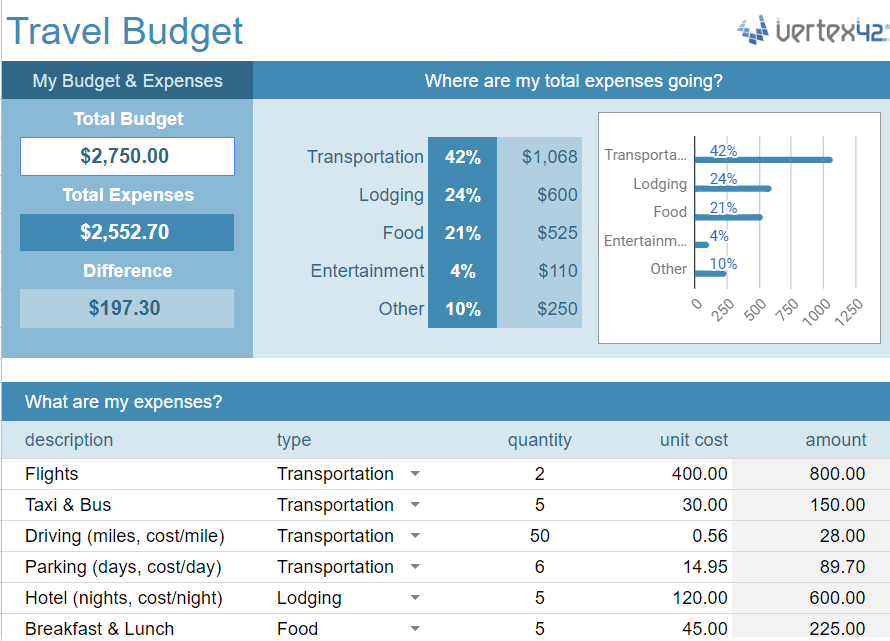
Understanding Your Travel Budget
When it comes to planning a trip, one of the most crucial aspects is setting a realistic travel budget. A well-planned budget ensures that you have enough funds to cover all your expenses, from transportation and accommodation to food and activities. Without a budget, you risk overspending and accumulating debt. In this article, we'll provide you with practical travel budget planning tips to help you make the most of your trip.
Assessing Your Finances
Before you start planning your trip, it's essential to assess your finances. Take a close look at your income, expenses, and savings to determine how much you can afford to spend on your trip. Consider your financial obligations, such as rent/mortgage, utilities, and debt payments. You'll also want to think about your savings goals, like building an emergency fund or retirement savings.
For example, let's say you earn $4,000 per month and have $1,500 in monthly expenses. You also have $5,000 in savings and want to build an emergency fund. Based on your financial situation, you may decide to allocate $1,000 for your trip.
Estimating Travel Costs
Estimating travel costs can be challenging, especially if you're planning a trip to a new destination. However, there are some general guidelines you can follow. Here are some estimated costs for common travel expenses:
Transportation: $500-$1,500 (depending on the mode of transportation and distance)
Accommodation: $30-$100 per night (depending on the type of accommodation and location)
Food: $30-$50 per day (depending on your eating habits and destination)
Activities: $50-$100 per person (depending on the type of activity and location)
Keep in mind that these are just rough estimates, and your actual costs may vary.
Creating a Budget Framework
Once you have an idea of your estimated travel costs, it's time to create a budget framework. Start by categorizing your expenses into needs and wants. Needs include essential expenses like transportation, accommodation, and food, while wants include discretionary expenses like activities and souvenirs.
Here's a simple budget framework you can use:
Needs (70-80% of your budget):
+ Transportation
+ Accommodation
+ Food
Wants (20-30% of your budget):
+ Activities
+ Souvenirs
+ Miscellaneous expenses
Prioritizing Expenses
When it comes to prioritizing expenses, it's essential to focus on your needs first. Make sure you have enough funds to cover your essential expenses, like transportation and accommodation. Once you've covered your needs, you can allocate funds to your wants.
For example, let's say you have $1,000 for your trip and need to prioritize your expenses. You may decide to allocate $700 for transportation, accommodation, and food, and $300 for activities and souvenirs.

Saving and Budgeting Strategies
There are several saving and budgeting strategies you can use to make the most of your travel budget. Here are a few tips:
50/30/20 rule: Allocate 50% of your income towards needs, 30% towards discretionary spending, and 20% towards saving and debt repayment.
Envelope system: Divide your expenses into categories (e.g., transportation, accommodation, food) and allocate a specific amount of cash for each category.
Travel fund: Set up a separate savings account specifically for your travel fund.
Avoiding Common Budgeting Mistakes
When it comes to travel budgeting, there are several common mistakes to avoid. Here are a few:
Underestimating expenses: Make sure to research your destination and estimate your expenses accurately.
Not budgeting for emergencies: Unexpected expenses can arise, so make sure to budget for emergencies.
Not tracking expenses: Keep track of your expenses to ensure you're staying within your budget.
Comparison of Budgeting Tools
There are several budgeting tools available to help you manage your travel budget. Here's a comparison of a few popular options:
| Tool | Features | Cost |
|---|---|---|
| Mint | Budget tracking, expense categorization, bill reminders | Free |
| You Need a Budget (YNAB) | Budgeting framework, expense tracking, savings goals | $6.99/month |
| Trail Wallet | Expense tracking, budgeting, travel-specific features | $4.99/month |
Case Study: Budgeting for a European Trip
Let's say you're planning a two-week trip to Europe and want to budget effectively. Here's a rough estimate of your expenses:
Transportation: $1,000 (flights, trains, buses)
Accommodation: $1,500 (avg. $100 per night)
Food: $500 (avg. $35 per day)
Activities: $500 (avg. $35 per day)
Based on these estimates, your total budget for the trip would be $3,500. You may decide to allocate funds to your wants, like trying local cuisine or taking a guided tour.
FAQs
Here are a few frequently asked questions about travel budget planning:
Q: How much should I budget for transportation? The cost of transportation varies depending on the mode of transportation and distance. Research your options and estimate costs accordingly.
Q: What's the best way to track my expenses while traveling?
Consider using a budgeting app or spreadsheet to track your expenses.
Q: How can I save money on accommodation?
Consider staying in hostels, guesthouses, or Airbnb apartments instead of hotels.
Q: What's the 50/30/20 rule?
The 50/30/20 rule is a budgeting framework that allocates 50% of your income towards needs, 30% towards discretionary spending, and 20% towards saving and debt repayment.
Conclusion
Travel budget planning is an essential part of any trip. By understanding your finances, estimating travel costs, creating a budget framework, prioritizing expenses, and using saving and budgeting strategies, you can make the most of your trip. Remember to avoid common budgeting mistakes and consider using budgeting tools to help you manage your expenses. With these practical travel budget planning tips, you'll be well on your way to a stress-free and enjoyable trip.
Related: What to Know About Free Tools for Small Businesses
Related: Side Hustles Ideas UK: What Actually Makes Sense?
Related: What to Know About Low Competition Online Business Ideas
