
What's in an Offer Letter for a Freelancer?
When engaging a freelancer, a well-structured offer letter is crucial to outline the scope of work, payment terms, and expectations. This document protects both the client and the freelancer by ensuring clarity on the project's objectives, timelines, and deliverables. An offer letter for a freelancer serves as a precursor to a formal contract, providing a clear understanding of the project's requirements.
Essential Components of an Offer Letter
Before diving into the template, it's essential to understand the critical elements that should be included in an offer letter for a freelancer:
Project Description: A detailed explanation of the project, including its objectives, scope, and timelines.
Payment Terms: A clear outline of the payment structure, including the total project cost, payment schedule, and method of payment.
Deliverables: A list of the expected deliverables, including any milestones or deadlines.
Confidentiality and Non-Disclosure: A statement outlining the freelancer's obligations regarding confidentiality and non-disclosure.
Offer Letter Template for Freelancers
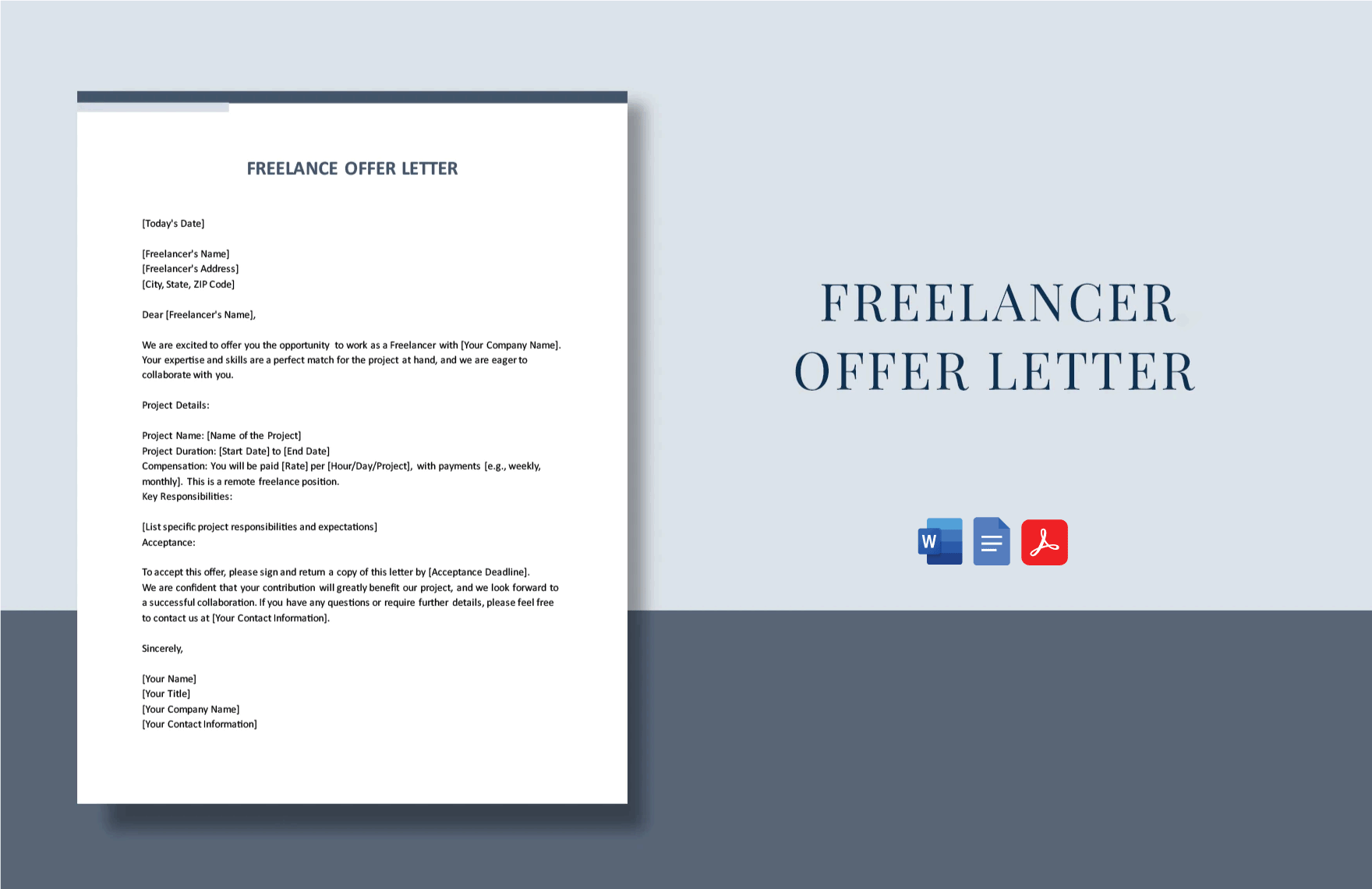
Below is a template that can be used as a starting point for creating an offer letter for a freelancer:
[Your Company Logo]
[Your Company Name]
[Your Company Address]
[City, State, ZIP]
[Date]
[Freelancer's Name]
[Freelancer's Address]
[City, State, ZIP]
Dear [Freelancer's Name],
We are pleased to offer you the opportunity to work on [Project Name] as a freelancer. This project aims to [briefly describe the project's objectives].
Project Details
Project Description: [Provide a detailed explanation of the project, including its scope and timelines.]
Deliverables: The expected deliverables for this project include [list the deliverables, including any milestones or deadlines].
Timeline: The project is expected to start on [start date] and end on [end date].
Payment Terms
Total Project Cost: The total cost for this project is $[total project cost].
Payment Schedule: Payments will be made as follows: [outline the payment schedule, including any milestones or deadlines].
Method of Payment: Payments will be made via [method of payment, e.g., bank transfer, PayPal].
Confidentiality and Non-Disclosure
As a freelancer working on this project, you will have access to confidential information and trade secrets. You agree to maintain the confidentiality of all information related to this project and not disclose it to any third party.
Acceptance
Please indicate your acceptance of this offer by signing and returning one copy of this letter to us by [date]. We also require a start date confirmation.
Additional Clauses
Depending on the nature of the project, you may want to include additional clauses, such as:
Intellectual Property: A statement outlining the ownership of intellectual property rights.
Termination: A statement outlining the conditions under which the project can be terminated.
Best Practices for Creating an Offer Letter
When creating an offer letter for a freelancer, keep the following best practices in mind:
Be Clear and Concise: Ensure that the language used is clear and concise, avoiding any ambiguity.
Use a Standard Template: Using a standard template can help streamline the process and ensure consistency.
Include All Essential Components: Make sure to include all essential components, such as project description, payment terms, and deliverables.
Comparison of Freelance Contracts
The following table compares the key elements of a freelance contract:
| Element | Fixed Price Contract | Hourly Rate Contract |
|---|---|---|
| <strong>Payment Structure</strong> | Total project cost | Hourly rate |
| <strong>Risk</strong> | Client bears risk | Freelancer bears risk |
| <strong>Flexibility</strong> | Less flexible | More flexible |
Common Mistakes to Avoid
When creating an offer letter for a freelancer, there are several common mistakes to avoid:
Vagueness: Avoid being too vague or ambiguous in the project description or payment terms.
- Omitting Essential Clauses: Make sure to include all essential clauses, such as confidentiality and non-disclosure.
Frequently Asked Questions
Q: What is the difference between an offer letter and a contract?
An offer letter is a preliminary document that outlines the terms of the project, while a contract is a more formal agreement that provides detailed terms and conditions.
Q: Do I need a lawyer to review the offer letter?
While not necessary, it's recommended to have a lawyer review the offer letter to ensure that it complies with local laws and regulations.
Q: Can I modify the offer letter template?
Yes, the offer letter template can be modified to suit the specific needs of the project.
Closing
An offer letter for a freelancer is a critical document that outlines the terms of the project and ensures clarity between the client and the freelancer. By using a standard template and including all essential components, you can create a comprehensive offer letter that protects both parties.
Related: Affordable Packaging Solutions: 25 Cheap Small Business
Related: 5 Useful Things to Know About Free Resume Templates
