
What to Know About Free Budget Planner Templates for Beginners
As a beginner, taking control of your finances can seem daunting. The first step towards financial stability is creating a budget, but where do you start? A free budget planner template can be a great starting point. With numerous options available, it's essential to understand what to look for in a template and how to choose the one that suits your needs.
Understanding Your Budgeting Needs
Before diving into templates, it's crucial to assess your financial situation. Take note of your income, expenses, debts, and savings goals. This will help you determine what features you need in a budget planner. For instance, if you're struggling with debt, you may want a template that prioritizes debt repayment. If you're saving for a big purchase, you may need a template that tracks savings goals.
Types of Budget Planner Templates
There are various types of budget planner templates available, each with its pros and cons. Here are a few popular options:
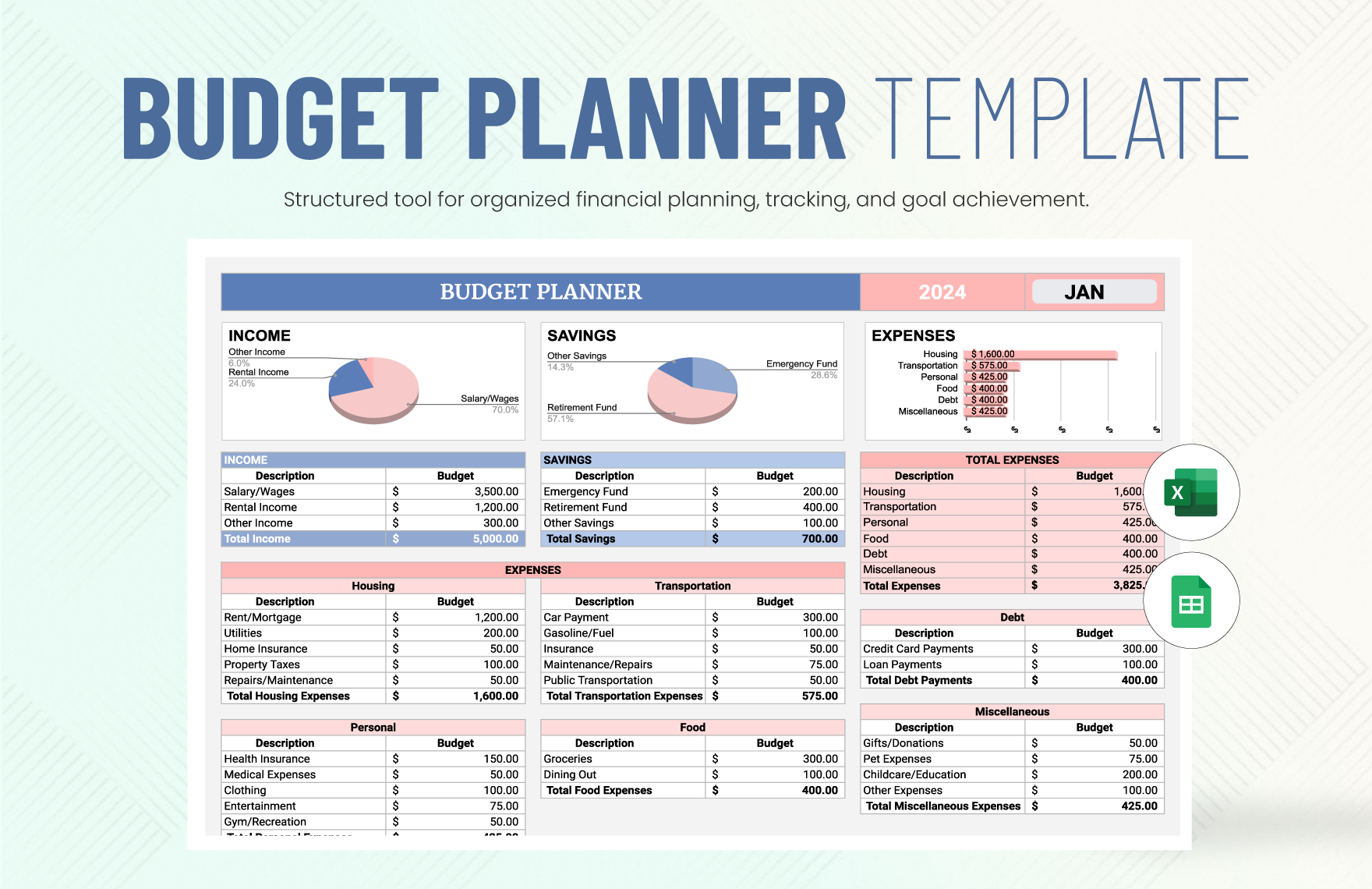
excel templates: Microsoft Excel offers a range of free budget templates that are easy to use and customize. They include formulas and formatting, making it easy to track your expenses and income.
Google Sheets Templates: Google Sheets provides a variety of free budget templates that are cloud-based and collaborative. You can access them from anywhere and share them with a financial advisor or partner.
PDF Templates: PDF templates are a great option if you prefer a simple, printable budget planner. They can be filled out manually, but may require more effort to update.
Key Features to Look for in a Budget Planner Template
When choosing a budget planner template, consider the following features:
Income and Expense Tracking: A basic budgeting feature that helps you monitor your income and expenses.
Categorization: The ability to categorize expenses (e.g., housing, transportation, entertainment) helps you identify areas for improvement.
Budgeting Goals: A template that allows you to set and track budgeting goals, such as saving for a emergency fund or paying off debt.
Calculations and Formulas: Automatic calculations and formulas can save you time and reduce errors.
Comparison of Popular Free Budget Planner Templates
| Template | Features | Ease of Use | Customization |
|---|---|---|---|
| Microsoft Excel Budget Template | Income and expense tracking, categorization, calculations | Easy | High |
| Google Sheets Budget Template | Income and expense tracking, categorization, collaboration | Easy | Medium |
| Vertex42 Budget Template | Income and expense tracking, budgeting goals, calculations | Medium | High |
| PDF Budget Planner | Manual income and expense tracking, basic calculations | Easy | Low |
"A budget planner template is only as good as your commitment to using it. Choose a template that fits your needs, and make sure to review and update it regularly." - Financial Expert
How to Choose the Right Template for You
With so many options available, it's essential to choose a template that aligns with your financial goals and needs. Consider the following:
Your comfort level with technology: If you're not tech-savvy, a simple PDF template may be the best option.
Your financial goals: If you're saving for a specific goal, choose a template that tracks savings goals.
Your level of customization: If you want to customize your template extensively, choose an Excel or Google Sheets template.
Practical Tips for Using a Budget Planner Template
Once you've chosen a template, here are some practical tips to get the most out of it:
Set realistic goals: Don't try to cut back on too many expenses at once. Set achievable goals and gradually make adjustments.
Track every expense: Make sure to log every transaction, no matter how small.
Review and adjust regularly: Schedule regular reviews to ensure you're on track to meet your financial goals.
Common Mistakes to Avoid
When using a budget planner template, avoid the following common mistakes:
Not tracking expenses regularly: Failing to log transactions can lead to inaccurate budgeting.
Setting unrealistic goals: Trying to cut back too much can lead to frustration and abandonment of the budget.
Not reviewing and adjusting: Failing to review and adjust your budget can lead to stagnation and missed financial goals.
Frequently Asked Questions
Q: What is the best free budget planner template for beginners?
The best template for beginners is one that is easy to use and understand. Microsoft Excel and Google Sheets offer a range of free templates that are great for beginners.
Q: How do I choose the right budget planner template?
Consider your financial goals, comfort level with technology, and level of customization when choosing a template.
Q: Can I use a budget planner template for saving for a specific goal?
Yes, many budget planner templates allow you to track savings goals. Choose a template that includes this feature.
Q: How often should I review and update my budget planner?
Review and update your budget planner regularly, ideally every few weeks or monthly.
Conclusion
A free budget planner template can be a powerful tool for managing your finances. By understanding your budgeting needs, choosing the right template, and using it effectively, you can take control of your finances and achieve your financial goals. Remember to review and adjust your budget regularly to ensure you're on track to financial stability.
Related: 5 Useful Things to Know About Free Budget Templates
Related: 5 Useful Things to Know About Free Budget Planner Templates
