
Planning Your Content in Advance
Imagine having to come up with new content ideas every day, without any clear strategy or direction. Sounds overwhelming, right? That's where a content calendar comes in – a tool that helps you plan, organize, and schedule your content in advance. In this article, we'll explore the benefits of using a content calendar, and provide you with a free marketing content calendar template to get you started.
What is a Content Calendar?
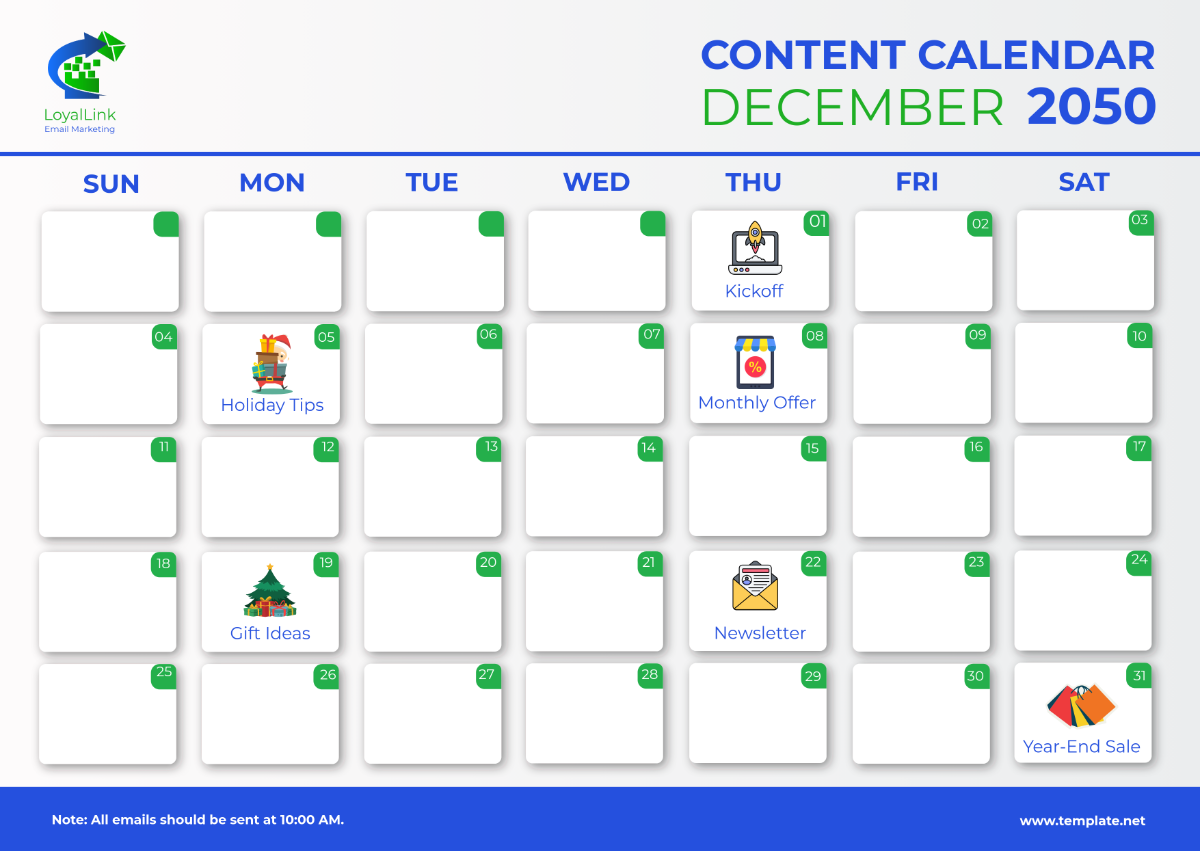
A content calendar is a table or spreadsheet that outlines the content you'll create and publish on various channels, such as social media, blog, email, and more. It's a visual representation of your content strategy, helping you to stay organized, focused, and ensure consistency across all your marketing channels.
Benefits of Using a Content Calendar
Using a content calendar offers numerous benefits, including:
Improved organization: A content calendar helps you plan and schedule content in advance, ensuring that you're always prepared and never scrambling for ideas.
Increased productivity: By planning your content in advance, you can batch similar tasks together, saving time and boosting productivity.
Enhanced consistency: A content calendar helps you maintain consistency across all your marketing channels, ensuring that your brand's voice and message are always on point.
Better collaboration: A content calendar facilitates collaboration among team members, ensuring that everyone is on the same page and working towards the same goals.
Creating Your Free Marketing Content Calendar Template
To create your own content calendar template, you'll need to consider the following elements:
Content types: What types of content will you create, such as blog posts, social media posts, email newsletters, or videos?
Channels: Which channels will you use to publish your content, such as Facebook, Twitter, Instagram, or LinkedIn?
Frequency: How often will you publish content on each channel?
Themes: What themes or topics will you focus on each month or quarter?
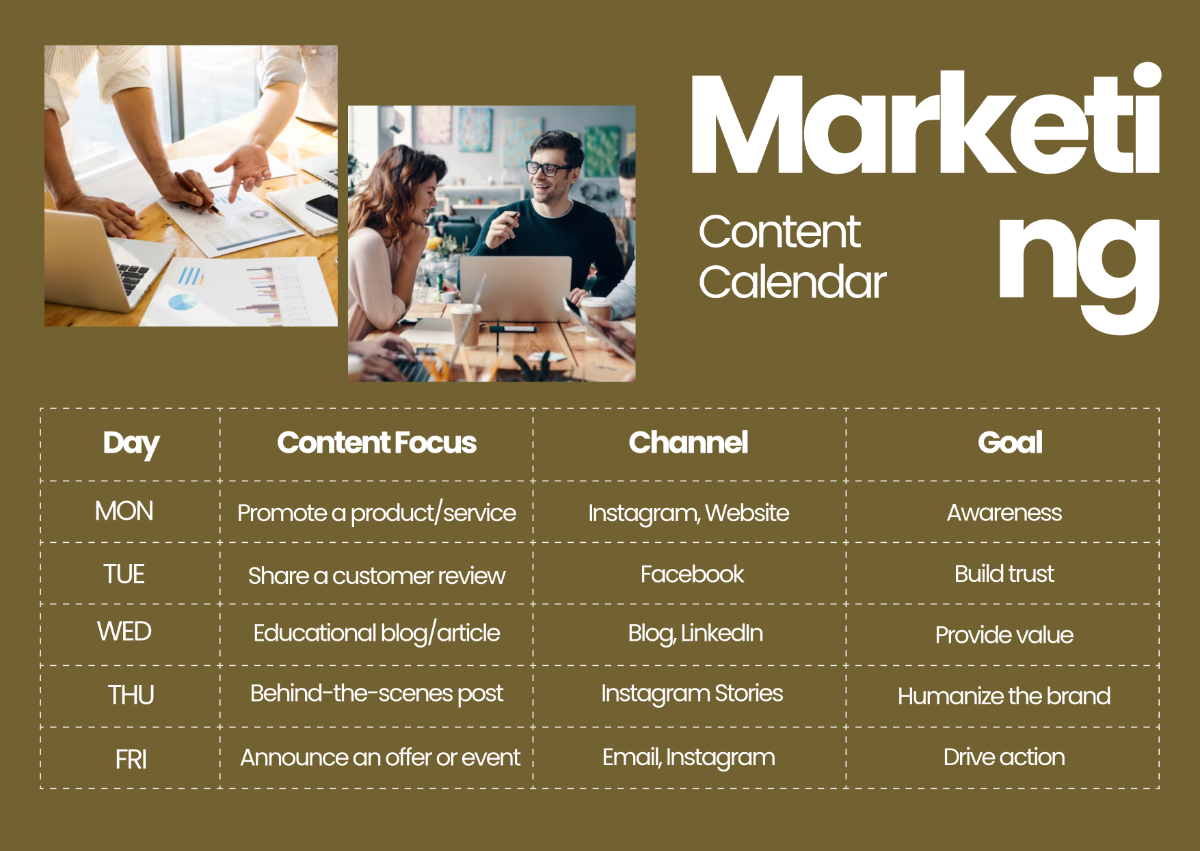
Here's a simple template you can use:
| Date | Content Type | Channel | Theme |
|---|---|---|---|
| 2023-03-01 | Blog post | Website | March Madness |
| 2023-03-03 | Social media post | Product promotion | |
| 2023-03-05 | Email newsletter | Newsletter |
Customizing Your Template
To make your content calendar template more effective, consider adding the following columns:
Target audience: Who is your target audience for each piece of content?
Keywords: What keywords or hashtags will you use for each piece of content?
Resources: What resources, such as images or videos, will you need for each piece of content?
Status: What is the status of each piece of content, such as "in draft" or "published"?
Using Your Content Calendar Template
Once you've created your content calendar template, it's time to start using it. Here are some tips to get you started:
Plan ahead: Plan your content at least a month in advance, but ideally, plan it quarterly or even annually.
Be flexible: Don't be afraid to adjust your content calendar as needed. Life can be unpredictable, and things don't always go as planned.
Collaborate with your team: Share your content calendar with your team and encourage collaboration and feedback.
Common Mistakes to Avoid
When creating and using a content calendar, there are several common mistakes to avoid:
Not planning ahead: Failing to plan your content in advance can lead to last-minute scrambles and poor-quality content.
Not being flexible: Being too rigid with your content calendar can lead to missed opportunities and burnout.
Not collaborating with your team: Failing to collaborate with your team can lead to duplication of effort and inconsistent messaging.
Case Study: How a Content Calendar Boosted Productivity
Let's take a look at a real-life example of how a content calendar boosted productivity. A marketing team at a software company was struggling to keep up with their content creation demands. They were spending too much time coming up with ideas and not enough time creating high-quality content. After implementing a content calendar, they were able to:
Increase their content output by 30%: By planning their content in advance, they were able to create more content and increase their output.
Reduce their planning time by 50%: By having a clear plan in place, they were able to reduce the time spent on planning and focus on creation.
FAQs
Here are some frequently asked questions about content calendars:
Q: What is the best format for a content calendar? The best format for a content calendar is one that works for you and your team. You can use a spreadsheet, a table, or even a physical calendar.
Q: How often should I update my content calendar?
You should update your content calendar regularly, ideally on a weekly or bi-weekly basis.
- Q: What if I'm not sure what content to create?
If you're not sure what content to create, start by brainstorming ideas with your team. You can also use tools like keyword research and social media listening to get inspiration.
Conclusion
A content calendar is a powerful tool that can help you plan, organize, and schedule your content effectively. By using a free marketing content calendar template and customizing it to fit your needs, you can save time, boost productivity, and ensure consistency across all your marketing channels. Remember to plan ahead, be flexible, and collaborate with your team to get the most out of your content calendar.
Here is a comparison table to help you choose the best content calendar template for your needs:
| Template | Features | Benefits |
|---|---|---|
| Simple spreadsheet | Easy to use, customizable | Great for small teams, simple content planning |
| Detailed calendar | Includes target audience, keywords, resources | Ideal for large teams, complex content planning |
| Visual calendar | Uses images and colors to visualize content | Perfect for creative teams, visually-oriented planning |
Related: Find the Perfect Free Resume Template in Word
Related: Best Resume Templates for Free Download to Land Your Dream Job
