
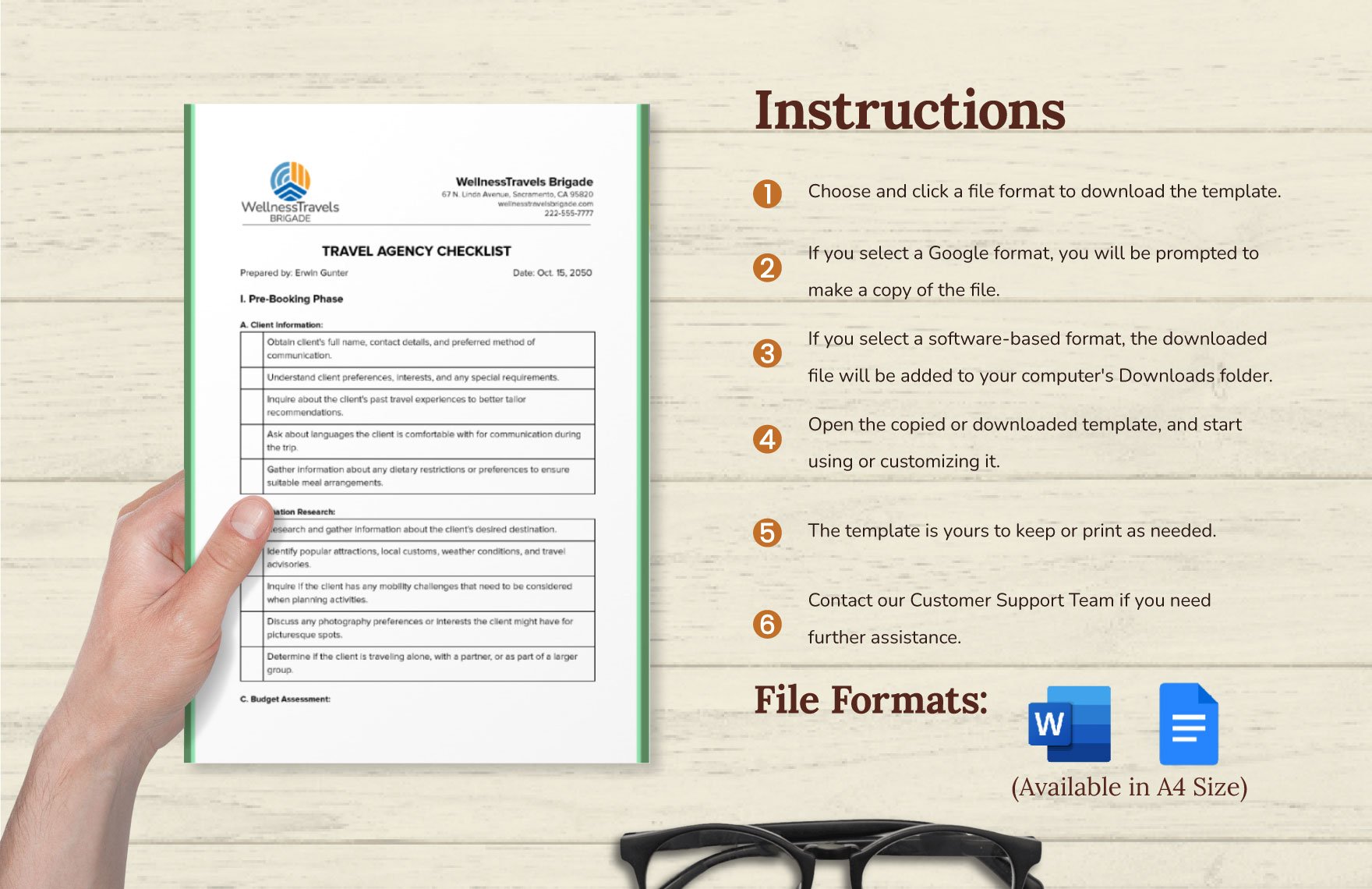
A Checklist Conundrum
As a travel agent, you're no stranger to juggling multiple clients, itineraries, and deadlines. A well-crafted checklist can be a lifesaver, ensuring that every detail is accounted for and every client leaves happy. But what makes a travel agent checklist template effective? Is it a lengthy, exhaustive list or a concise, high-level guide?
The Anatomy of a Travel Agent Checklist
A good travel agent checklist template should strike a balance between comprehensiveness and usability. Here are some essential sections to consider:
Client Information: A brief overview of the client's travel preferences, contact details, and special requests
Itinerary Details: Flight information, accommodation details, and transportation arrangements
Travel Documents: Passport and visa requirements, travel insurance, and health certificates
Activities and Excursions: Bookings for tours, activities, and experiences
Payment and Invoicing: A clear breakdown of costs, payment terms, and outstanding balances
The Tradeoff: Comprehensive vs. Concise
A common debate among travel agents is whether to use a comprehensive checklist that covers every possible scenario or a concise checklist that focuses on the essentials. Here are some pros and cons of each approach:
Comprehensive Checklist
Pros:
Covers all bases, reducing the risk of errors or oversights
Provides a detailed framework for complex itineraries
Cons:
Can be overwhelming and time-consuming to complete
May lead to analysis paralysis
Concise Checklist
Pros:
Quick to complete and easy to reference
Encourages agents to focus on high-priority tasks
Cons:
May omit critical details or steps
Requires agents to rely on experience and judgment
A Practical Approach
So, what actually makes sense for a travel agent checklist template? A practical approach is to use a hybrid checklist that combines the best of both worlds. This can be achieved by:
Breaking down complex tasks into smaller steps: Divide larger tasks into manageable chunks, making it easier to complete and review
Using a tiered system: Categorize tasks into high-priority, medium-priority, and low-priority, allowing agents to focus on the most critical details
Leaving room for notes and comments: Encourage agents to add context and clarify any ambiguities
A Sample Travel Agent Checklist Template
Here's a sample hybrid checklist template:
Pre-Trip Planning
Client information:
+ Contact details
+ Travel preferences
+ Special requests
Itinerary details:
+ Flight information
+ Accommodation details
+ Transportation arrangements
Travel documents:
+ Passport and visa requirements
+ Travel insurance
Trip Execution
Confirm flight and accommodation details
Arrange transportation and transfers
Provide clients with travel documents and information

Post-Trip Follow-up
Client satisfaction survey
Review and feedback
Follow-up on outstanding payments or issues
The Benefits of a Well-Crafted Checklist
A well-designed travel agent checklist template can have a significant impact on your business. Here are some benefits to expect:
Improved client satisfaction: By ensuring that every detail is accounted for, you can provide a seamless and enjoyable experience for your clients
Increased productivity: A streamlined checklist helps agents work more efficiently, freeing up time for high-value tasks
Reduced errors and stress: A clear and concise checklist reduces the risk of mistakes and misunderstandings, minimizing stress and anxiety
Common Mistakes to Avoid
When creating or using a travel agent checklist template, be aware of these common mistakes:
Overreliance on the checklist: Don't rely solely on the checklist; use your experience and judgment to ensure that every client receives personalized attention
Insufficient training: Make sure that all agents understand the checklist and its purpose, and provide ongoing training and support
- Failure to review and update: Regularly review and update the checklist to ensure that it remains relevant and effective
FAQs
Q: What is the best way to create a travel agent checklist template?
Start by identifying the essential tasks and sections that are critical to your business. Consider using a hybrid approach that combines comprehensive and concise elements.
Q: How often should I review and update my checklist?
Regularly review and update your checklist to ensure that it remains relevant and effective. This can be done quarterly or bi-annually, depending on your business needs.
Q: Can I use a digital checklist or do I need a physical one?
Both digital and physical checklists have their advantages. Consider using a digital checklist for ease of access and collaboration, and a physical checklist for situations where technology may not be available.
Q: How can I ensure that my agents are using the checklist correctly?
Provide ongoing training and support to ensure that all agents understand the checklist and its purpose. Regularly review and monitor agent performance to ensure that the checklist is being used effectively.
Conclusion
A well-crafted travel agent checklist template is a powerful tool for streamlining your workflow, improving client satisfaction, and boosting productivity. By striking a balance between comprehensiveness and usability, you can create a checklist that actually makes sense for your business. Avoid common mistakes, regularly review and update your checklist, and ensure that your agents are using it correctly. With these best practices in mind, you can create a checklist that helps you deliver exceptional service and grow your business.
Related: A Practical Guide to Small Business Ideas for Beginners
Related: 5 Useful Freebie Ideas to Boost Your Small Business
