

Effective time management is a skill that can make all the difference in our lives. With the constant demands of work, family, and personal responsibilities, it's easy to feel overwhelmed and struggling to keep up. But what if you could manage your time more efficiently, achieve your goals, and still have time for the things that bring you joy?
Understanding Your Time Management Style
Before we dive into specific tips, it's essential to understand your time management style. Are you a procrastinator, always putting off tasks until the last minute? Or are you a perfectionist, spending too much time on a single task? Perhaps you're a multitasker, juggling multiple projects simultaneously, but struggling to focus. Understanding your strengths and weaknesses will help you choose the right strategies to improve your time management skills.
For instance, if you're a morning person, you might find that you're most productive during the early hours of the day. On the other hand, if you're a night owl, you might prefer to work later in the day. Knowing your natural rhythms can help you schedule your tasks more effectively.
Prioritizing Tasks: The Eisenhower Matrix
One of the most effective time management techniques is the Eisenhower Matrix, a simple decision-making tool that helps you prioritize tasks based on their urgency and importance. The matrix consists of four quadrants:
Urgent and important (Do first)
Important but not urgent (Schedule)
Urgent but not important (Delegate)
Not urgent or important (Delete)
By categorizing your tasks into these quadrants, you can focus on the most critical tasks first and delegate or eliminate less important ones. For example, if you're working on a project with a tight deadline, it's essential to prioritize tasks that are both urgent and important.
Time Blocking: Scheduling Your Day
Time blocking is a scheduling technique that involves dividing your day into fixed, uninterrupted blocks of time dedicated to specific tasks. This approach helps you avoid multitasking, minimize distractions, and make the most of your time. Here's an example of how you can implement time blocking:
8:00-9:00 am: Morning routine (exercise, meditation, breakfast)
9:00-10:30 am: Focus on most important task (writing, coding, designing)
10:30-10:50 am: Break (relaxation, stretching, snack)
10:50 am-12:00 pm: Meetings and calls
By scheduling your day in advance, you can ensure that you have enough time for each task and avoid overcommitting.
Avoiding Distractions and Procrastination
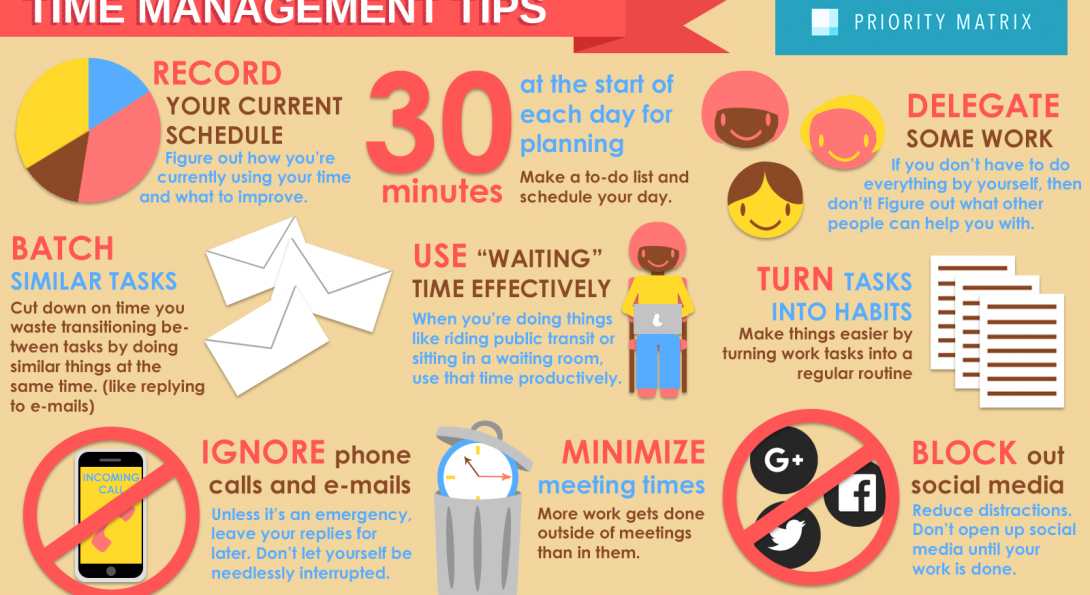
Distractions and procrastination are two of the biggest time management challenges. With the constant notifications from our phones, social media, and email, it's easy to get sidetracked and lose focus. Here are some strategies to help you avoid distractions and procrastination:
Turn off notifications during focused work periods
Use website blockers (e.g., Freedom, SelfControl) to limit access to distracting websites
Break down large tasks into smaller, manageable chunks
Create a "stop doing" list to eliminate non-essential tasks
For instance, if you're working on a complex task, you might find it helpful to use the Pomodoro Technique, which involves working in focused 25-minute increments, followed by a 5-minute break.
Managing Meetings and Interruptions
Meetings and interruptions can be significant productivity killers. Here are some tips to help you manage them more effectively:
Schedule meetings in advance and set clear agendas
Limit the number of attendees to only those who are essential
Use a "meeting-free" day or afternoon to focus on critical tasks
Establish a "do not disturb" sign or signal to minimize interruptions
By being more intentional with your meetings and interruptions, you can protect your focused work time and make the most of your day.
Staying Motivated and Accountable
Finally, staying motivated and accountable is crucial to effective time management. Here are some strategies to help you stay on track:
Set clear goals and deadlines
Create a accountability partner or join a productivity group
Celebrate your achievements and reflect on your progress
Reward yourself for milestones achieved
For example, you might find it helpful to share your goals and progress with a friend or mentor, who can provide encouragement and support.
Comparison of Time Management Techniques
| Technique | Description | Benefits |
|---|---|---|
| Eisenhower Matrix | Prioritizing tasks based on urgency and importance | Helps focus on critical tasks, reduces stress |
| Time Blocking | Scheduling fixed, uninterrupted blocks of time | Improves focus, reduces multitasking, increases productivity |
| Pomodoro Technique | Working in focused increments with regular breaks | Boosts concentration, reduces burnout |
Frequently Asked Questions
Q: How do I prioritize tasks when everything seems urgent?
Use the Eisenhower Matrix to categorize tasks into urgent vs. important and focus on the most critical ones first.
Q: How can I avoid procrastination and stay motivated?
Break down large tasks into smaller chunks, create a schedule, and reward yourself for milestones achieved.
Q: What's the best way to manage meetings and interruptions?
Schedule meetings in advance, limit attendees, and establish a "do not disturb" sign or signal to minimize interruptions.
Q: How can I stay accountable and motivated?
Set clear goals and deadlines, create an accountability partner or join a productivity group, and celebrate your achievements.
Conclusion
Effective time management is a skill that takes practice, patience, and persistence. By understanding your time management style, prioritizing tasks, using time blocking, avoiding distractions and procrastination, managing meetings and interruptions, and staying motivated and accountable, you can achieve a better work-life balance and make the most of your time. Remember, it's not about being perfect; it's about being intentional and making progress towards your goals.
Related: Master Time Management: Boost Productivity Without Stress
