
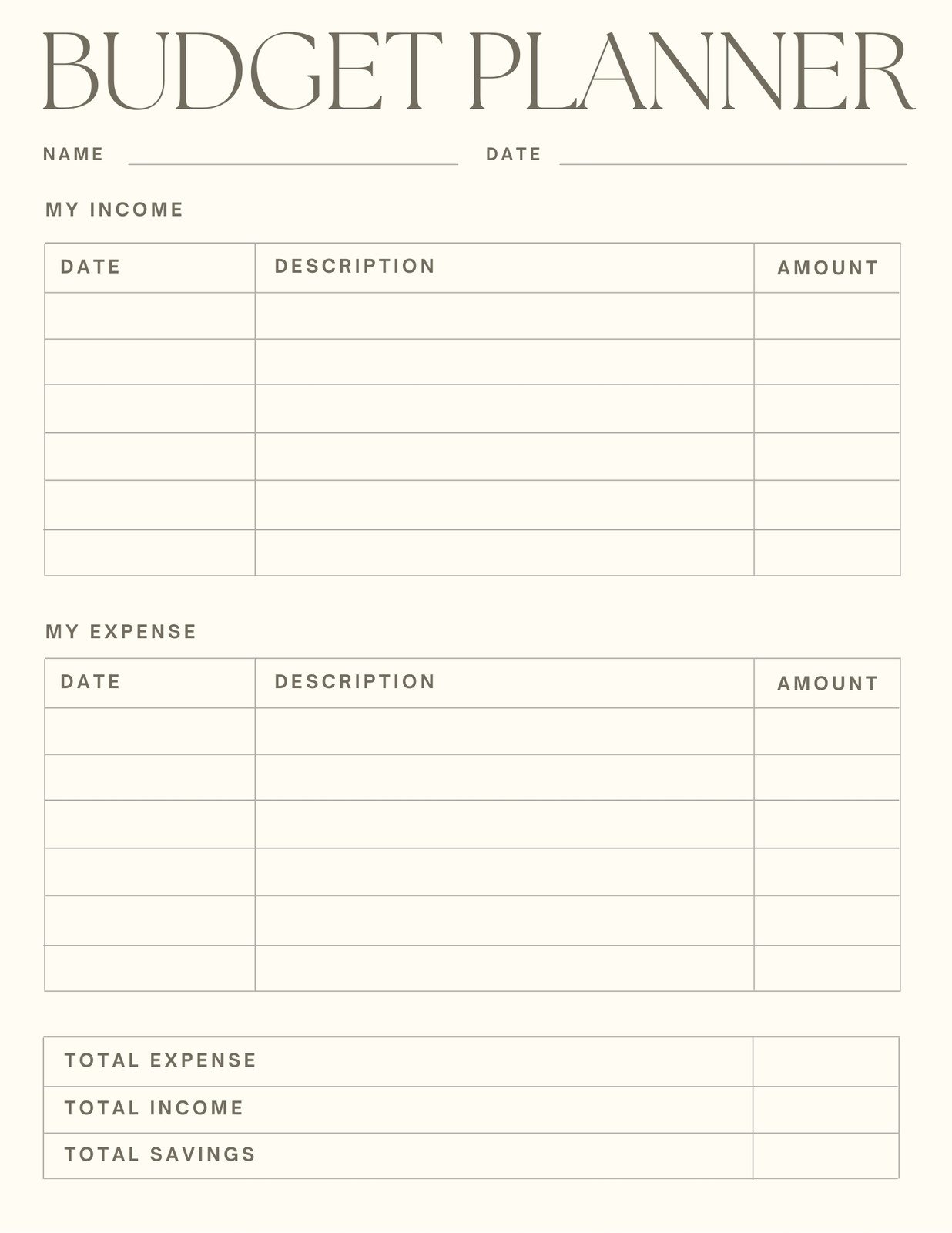
A Practical Guide to Finding and Using a Free Budget Planner Template for Beginners
As a beginner, taking control of your finances can seem daunting. The first step towards financial stability is creating a budget, but where do you start? A free budget planner template can be a great tool to help you get organized and on track. In this guide, we'll walk you through what to look for in a budget template, how to choose the best one for your needs, and provide you with a clear understanding of how to use it effectively.
Understanding Your Financial Needs
Before you start searching for a budget planner template, it's essential to understand your financial situation. Take some time to gather information about your income, expenses, debts, and savings goals. This will help you determine what features you need in a budget template. Consider the following:
What are your income sources?
What are your fixed expenses, such as rent/mortgage, utilities, and car payments?
What are your variable expenses, such as groceries, entertainment, and hobbies?
Do you have any debts or financial obligations?
What are your short-term and long-term savings goals?
What to Look for in a Free Budget Planner Template
When searching for a free budget planner template, there are several factors to consider. Here are some key features to look for:
Ease of use: The template should be easy to understand and use, even if you're not familiar with budgeting.
Customization: The template should allow you to customize it to fit your specific financial needs.
Comprehensive: The template should cover all aspects of your finances, including income, expenses, savings, and debt.
Flexibility: The template should be flexible enough to accommodate changes in your financial situation.
Types of Budget Planner Templates
There are several types of budget planner templates available, each with its own unique features and benefits. Here are a few:
Simple budget template: A basic template that tracks income and expenses.
Detailed budget template: A comprehensive template that tracks income, expenses, savings, and debt.
50/30/20 budget template: A template that allocates 50% of income towards fixed expenses, 30% towards discretionary spending, and 20% towards savings and debt repayment.
Comparison of Popular Free Budget Planner Templates
| Template | Features | Ease of Use | Customization |
|---|---|---|---|
| Vertex42 | Comprehensive, 50/30/20 budgeting, easy to use | High | High |
| Mint | Simple, easy to use, connects to bank accounts | High | Low |
| NerdWallet | Detailed, 50/30/20 budgeting, investment tracking | Medium | Medium |
"A budget template is not a one-size-fits-all solution. It's essential to choose a template that fits your financial needs and goals."
How to Choose the Best Free Budget Planner Template
With so many free budget planner templates available, it can be overwhelming to choose the best one. Here are some tips to help you make the right decision:
Assess your financial needs: Consider your income, expenses, debts, and savings goals.
Read reviews: Look for templates with positive reviews and ratings.
Check the features: Ensure the template has the features you need to track your finances effectively.
Try it out: Test the template with your financial data to ensure it's easy to use and customize.
Using Your Free Budget Planner Template Effectively
Once you've chosen a budget planner template, it's essential to use it effectively. Here are some tips to get you started:
Set financial goals: Determine what you want to achieve with your budget.
Track your expenses: Record every transaction to get a clear picture of your spending habits.
Adjust as needed: Review your budget regularly and make adjustments as your financial situation changes.

Common Mistakes to Avoid
When using a free budget planner template, there are several common mistakes to avoid:
Not tracking expenses: Failing to record every transaction can lead to inaccurate budgeting.
Not adjusting the budget: Failing to adjust the budget as financial circumstances change can lead to ineffective budgeting.
Not prioritizing needs over wants: Failing to prioritize essential expenses over discretionary spending can lead to financial difficulties.
Troubleshooting and FAQs
Q: What if I'm not tech-savvy? Can I still use a free budget planner template?
Yes, most free budget planner templates are easy to use and don't require technical expertise.
Q: Can I use a free budget planner template if I have a complex financial situation?
Yes, but you may need to customize the template to fit your specific needs.
Q: How often should I review and update my budget?
You should review and update your budget regularly, ideally every few months.
Q: Can I use a free budget planner template for business finances?
While some templates can be used for business finances, it's best to use a template specifically designed for business budgeting.
Conclusion
Taking control of your finances requires effort and dedication, but with the right tools, you can achieve financial stability. A free budget planner template can be a valuable resource to help you get started. By understanding your financial needs, choosing the right template, and using it effectively, you can take the first step towards achieving your financial goals.
