
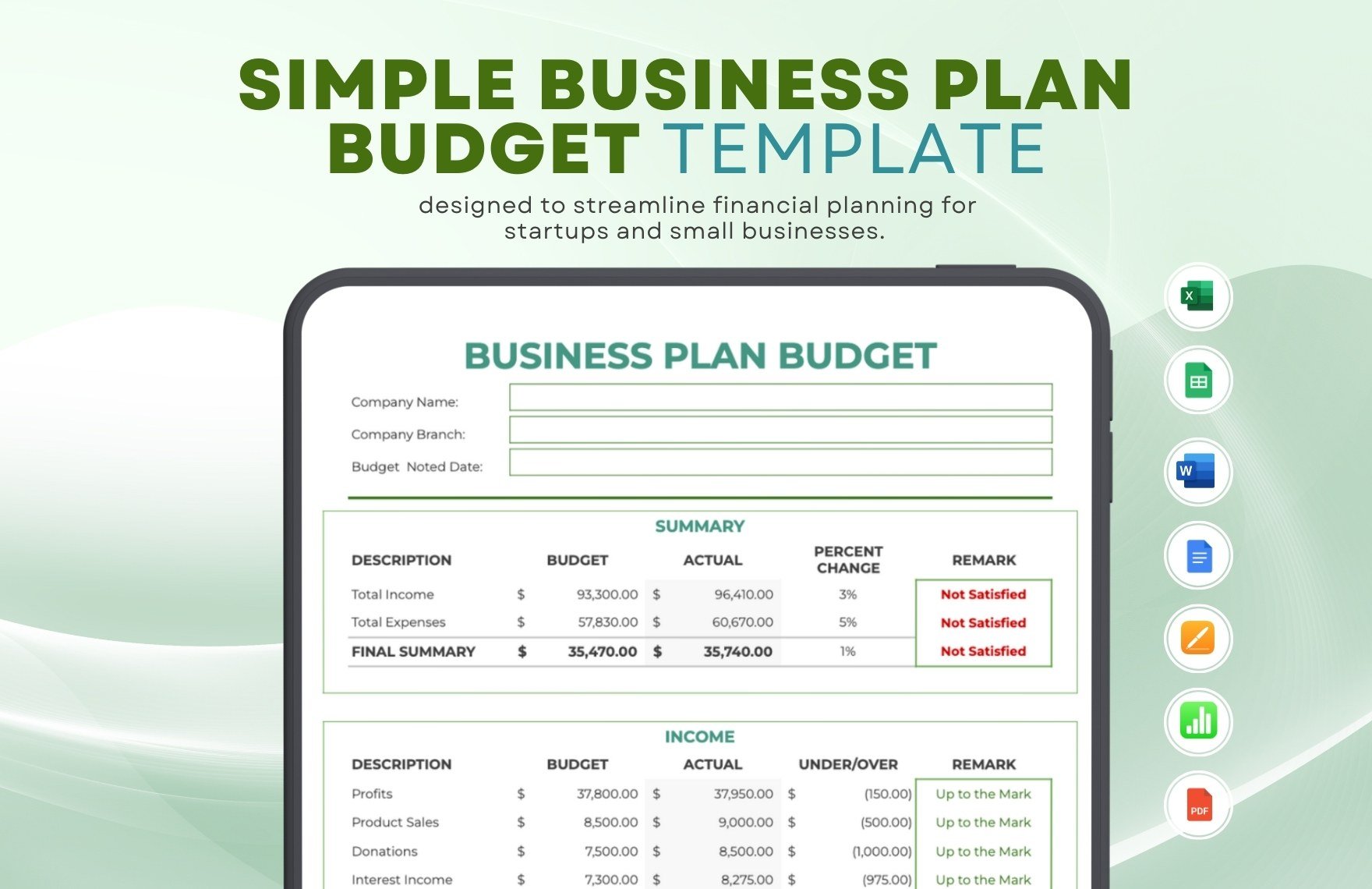
The Struggle is Real: Why Small Business Budgeting Matters
Running a small business is no easy feat. Between managing teams, serving customers, and keeping up with industry trends, it's easy to let financial planning fall by the wayside. But neglecting your business's finances can have serious consequences, from cash flow crises to missed opportunities. A simple budget template can be a lifesaver, helping you stay on top of income and expenses, make informed decisions, and drive growth.
What Makes a Good Budget Template?
So, what should you look for in a simple budget template for your small business? Here are a few key characteristics:
Easy to use: Your template should be intuitive and straightforward, with clear labels and minimal complexity.
Comprehensive: A good template should cover all the essential financial categories, including income, fixed costs, variable costs, and savings.
Flexible: Your template should be adaptable to your business's unique needs and circumstances.
A Basic Budget Template: The Building Blocks
A simple budget template typically consists of the following components:
Income: This section includes all your business's revenue streams, such as sales, services, and investments.
Fixed Costs: These are regular, non-changing expenses, like rent, utilities, and salaries.
Variable Costs: These expenses vary from month to month, such as materials, marketing, and travel.
Savings: This section is for setting aside funds for future investments, emergencies, or growth initiatives.

Example: A Simple Budget Template
Let's say you're a freelance writer with a small business. Your income is $4,000 per month, and your fixed costs are:
| Category | Cost |
|---|---|
| Rent | $1,500 |
| Utilities | $150 |
| Software | $100 |
| Insurance | $200 |
Your variable costs might include:
| Category | Cost |
|---|---|
| Marketing | $500 |
| Travel | $200 |
| Training | $100 |
Choosing the Right Template for Your Business
With so many budget templates available, it's essential to choose one that fits your business's specific needs. Here are a few popular options:
Spreadsheet templates: Google Sheets, Microsoft Excel, or LibreOffice Calc offer a range of free and paid templates.
Budgeting software: Tools like Mint, You Need a Budget (YNAB), or QuickBooks provide automated budgeting and tracking features.
Online templates: Websites like TemplateLab, Vertex42, or Budgeting software providers offer a range of free and customizable templates.

Comparison: Spreadsheet Templates vs. Budgeting Software
| Spreadsheet Templates | Budgeting Software |
|---|---|
| <strong>Ease of use</strong> | Easy to set up, but manual data entry |
| <strong>Customization</strong> | Highly customizable |
| <strong>Cost</strong> | Free or low-cost |
How to Implement Your Simple Budget Template
Now that you've chosen a template, it's time to put it into action. Here are some steps to follow:
- Gather financial data: Collect your business's financial records, including income statements, bank statements, and expense reports.
- Set financial goals: Determine what you want to achieve with your budget, such as increasing revenue or reducing costs.
- Fill in the template: Enter your financial data into the template, making sure to categorize expenses correctly.
- Review and adjust: Regularly review your budget to ensure it's on track, and make adjustments as needed.
Common Budgeting Mistakes to Avoid
Even with a simple budget template, it's easy to make mistakes. Here are a few common pitfalls to avoid:
Not tracking expenses: Failing to record all expenses can lead to inaccurate budgeting and financial surprises.
Underestimating costs: Underestimating costs can result in overspending and financial strain.
Not reviewing regularly: Failing to review your budget regularly can lead to missed opportunities and financial stagnation.
FAQs
Here are some frequently asked questions about simple budget templates for small businesses:
Q: What is a simple budget template, and how does it work?
A simple budget template is a basic financial planning tool that helps small businesses track income and expenses.
Q: How do I choose the right budget template for my business?
Consider your business's specific needs, the template's ease of use, and its customization options.
Q: Can I use a spreadsheet template for my small business budget?
Yes, spreadsheet templates are a popular and effective option for small business budgeting.
- Q: How often should I review my budget?
Review your budget regularly, ideally monthly or quarterly, to ensure you're on track to meet your financial goals.
Conclusion
Managing your small business's finances doesn't have to be overwhelming. A simple budget template can provide a clear and straightforward way to track income and expenses, make informed decisions, and drive growth. By choosing the right template, implementing it effectively, and avoiding common mistakes, you can take control of your business's finances and achieve your goals.
Related: 5 Useful Things to Know About Online Course Website Templates
